
Mini vs Clear Orthodontic Brackets: A Buyer's Head-to-Head
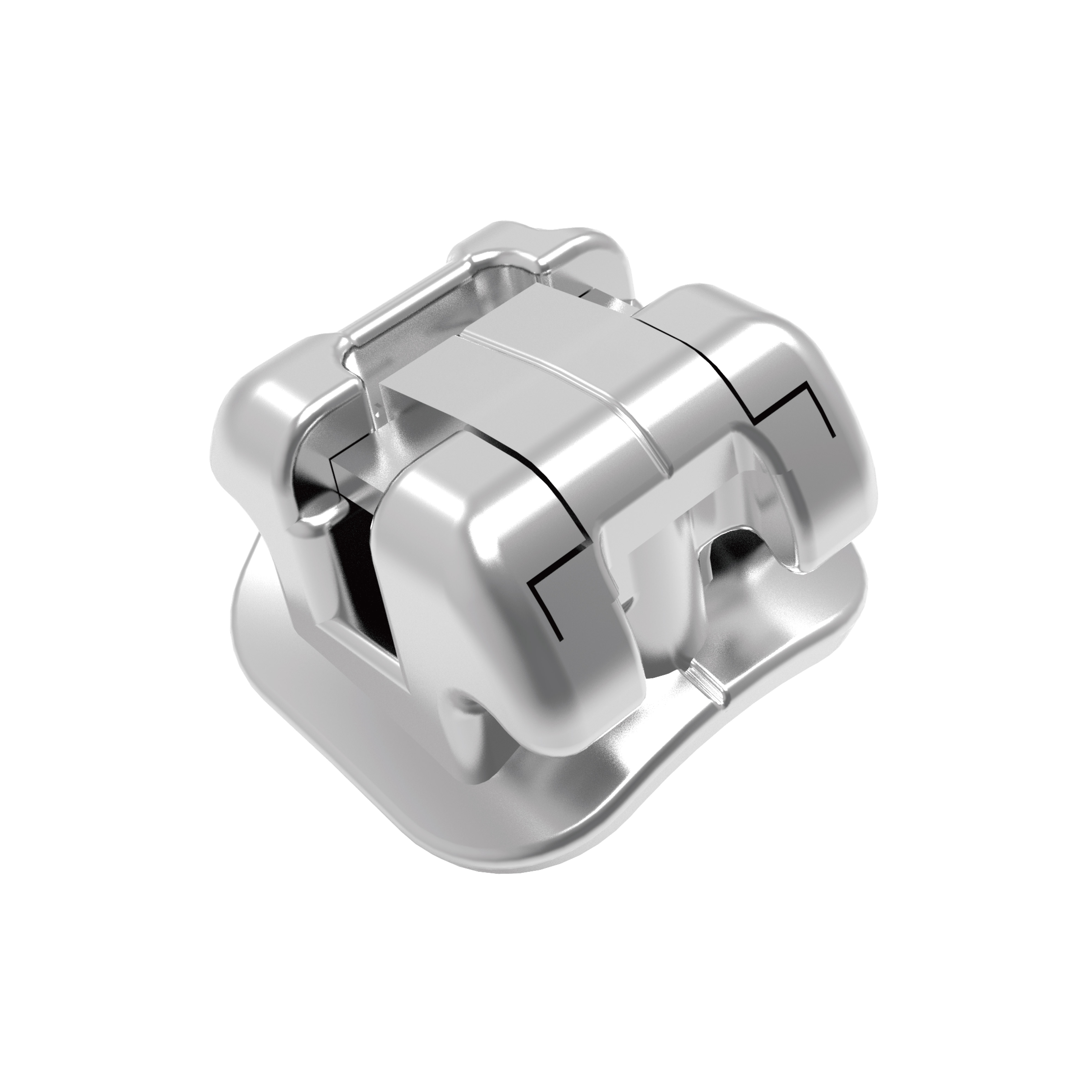
Mini and clear brackets are catalogue neighbours, not interchangeable options. Image: Yortho Y-M2 mini self-ligating bracket.
Mini orthodontic brackets and clear orthodontic brackets are usually listed side by side in a supplier catalogue, which makes them look like two answers to one question. They are not. “Mini” describes how much space the bracket body occupies. “Clear” describes how visible the bracket is and, in practice, the ceramic body used to achieve that. Neither label states slot size, prescription, torque, material grade or bonding base — the details that decide whether a stocked bracket actually fits a clinic's cases.
That distinction matters most at the point where a clinic or distributor moves from general research into a shortlist. A buyer who evaluates the two categories as direct substitutes tends to buy one of them badly: either an esthetic bracket that does not match the slot family already in the drawers, or a low-profile bracket that ignores the reason esthetic-led patients accepted treatment in the first place. This head-to-head sets out what each label means, where each belongs in a case mix, how esthetic priorities turn into inventory, and what to verify before a purchase order is raised.
What “Mini” and “Clear” Actually Describe
“Mini” is a dimensional term. It refers to a bracket designed with a reduced overall footprint compared with a conventional bracket body, so that less of the working field is occupied by the appliance. The word says nothing about material: a reduced-profile bracket can be metal or ceramic.
“Clear” is an appearance term. It refers to a bracket intended to be visually discreet, which in orthodontics is normally achieved with a ceramic body closer to the tooth colour than metal. The word says nothing about size: a clear bracket can be conventional or reduced-profile.
The two descriptions therefore overlap rather than compete, and Yortho's own catalogue shows the overlap directly. The clear bracket is listed as the Y-C2 Mini Self-ligating Ceramic Bracket — mini, self-ligating and ceramic in one model designation — while the mini bracket is listed as the Y-M2 Mini Self-ligating Bracket. The metal line appears as the Y-M1 Mini Bracket under “Metal Orthodontic Brackets”. Reduced profile therefore runs across the portfolio rather than sitting in one category, and a buyer who treats “mini” and “clear” as mutually exclusive would mis-sort at least two of these lines.
What the label leaves out is the part procurement has to check. For any bracket, whatever its label, the specification should state slot size, prescription or system, torque values, material, and bonding base design. Where a supplier cannot put those on a data sheet, the category label is doing work it cannot support, and the difference between two catalogue entries may be smaller or larger than the buyer assumes.
Both categories can be checked against one neutral reference. ISO 27020:2019, Dentistry — Brackets and tubes for use in orthodontics, sets out requirements and test methods for orthodontic brackets and tubes. Naming that standard in an RFQ gives metal and ceramic offers a common basis for test reporting, instead of leaving the comparison to catalogue adjectives.
Why Both Categories Stay in the Same Catalogue
Volume still sits with metal-based systems. A commercial market estimate from Fortune Business Insights places metal brackets at roughly 52% to 55% of global orthodontic procedures, citing durability and cost-effectiveness. That is a market-research estimate rather than a clinical finding, but it explains the shape of a full-range catalogue: a metal core that carries turnover, with an esthetic tier built around it rather than replacing it.
Esthetic demand creates the second tier. Practices with adult case flow need a bracket a patient will accept visually, and that is a different purchase criterion from volume economics. Keeping a clear line in stock is therefore a service decision as much as a margin decision — it protects case acceptance in the segment where appearance is part of the conversation.
Documentation adds a third reason to hold both, and a reason to keep their files separate. Bracket paperwork is managed per product and per market, not per catalogue label. In the European Union, Regulation (EU) 2017/745 on medical devices (MDR) has applied since 26 May 2021, and CE marking requires a conformity assessment route appropriate to the device class. In the United States, orthodontic appliances are regulated as dental devices under 21 CFR Part 872, with establishment registration and device listing obligations under 21 CFR Part 807, and the FDA Quality Management System Regulation takes effect on 2 February 2026, aligning 21 CFR Part 820 with ISO 13485:2016. The practical consequence for a buyer is simple: a certificate or test report issued for one bracket family is not evidence for another, so two bracket categories mean two documentation sets.
Case Suitability: Start With the Case Mix, Not the Catalogue
The useful question is not which bracket category is better, but which mix of cases the clinic actually treats. Three checks convert that mix into a defensible order.
First, how much of the case list is esthetic-led? If a predictable share of patients are adults who chose treatment partly because the appliance is discreet, the clear line earns its shelf space. If that share is occasional, single-kit stocking or ordering against specific cases may be enough, and a deep clear inventory becomes dead stock.
Second, does the clinician actually specify a reduced-profile bracket? A reduced footprint is chosen when less of the appliance in the working field is clinically useful. The trade-off is that “mini” is not a standard dimension: any reduction has to be checked against the slot, torque and ligation specification of the specific product, not assumed from the name. Buying a mini bracket on the strength of its label, without the data sheet, is a specification guess.
Third, does the chosen bracket share the slot family already in the drawers? This is where the accessory range becomes the constraint. Yortho's Y-H6002 first molar bands and Y-T1 buccal tubes are offered in Roth and MBT systems with 0.018″ and 0.022″ slot options, and the Y-T1 tubes are supplied as complete sets of four. If the bracket is ordered in a different slot family, those attachments stop being interchangeable with the ones on the shelf, and one purchase quietly splits the inventory into two systems.
Final case selection remains a clinical decision, and it should. The procurement task is narrower but still consequential: stock brackets whose documented dimensions and prescriptions support the cases the clinician accepts, and keep that documentation on file so the choice can be defended later.
Esthetic Priorities: What the Buyer Is Actually Purchasing
Esthetics is the reason the clear line exists, but “esthetic” is not a specification. For a buyer, an esthetic priority translates into three concrete questions.
How is the visual claim documented? Ask for the material description and the product's visual description in writing, so the clinic's expectation is set by the supplier's documentation rather than by a photograph. A photograph is a marketing asset; a material statement is a purchase input.
How deep is the variant range? Every additional slot size, prescription or arch configuration in the clear line becomes its own SKU. The clear line's inventory cost is therefore set by how many configurations the clinic genuinely needs, not by how many the catalogue offers.
Is the esthetic claim checkable over time? A buyer can ask what documentation the supplier holds on material and surface characteristics, and can treat the answer as part of supplier qualification rather than as a formality. If no written answer is available, the esthetic premium is being paid on trust alone.
There is a cost side too. Clear brackets are a different material purchase from metal, so they should be quoted by model code and configuration, not by category, so that a metal offer and a ceramic offer can be compared on the same basis.
Handling and Chairside Considerations
Handling differences show up in the instrument tray as much as at the bracket itself.
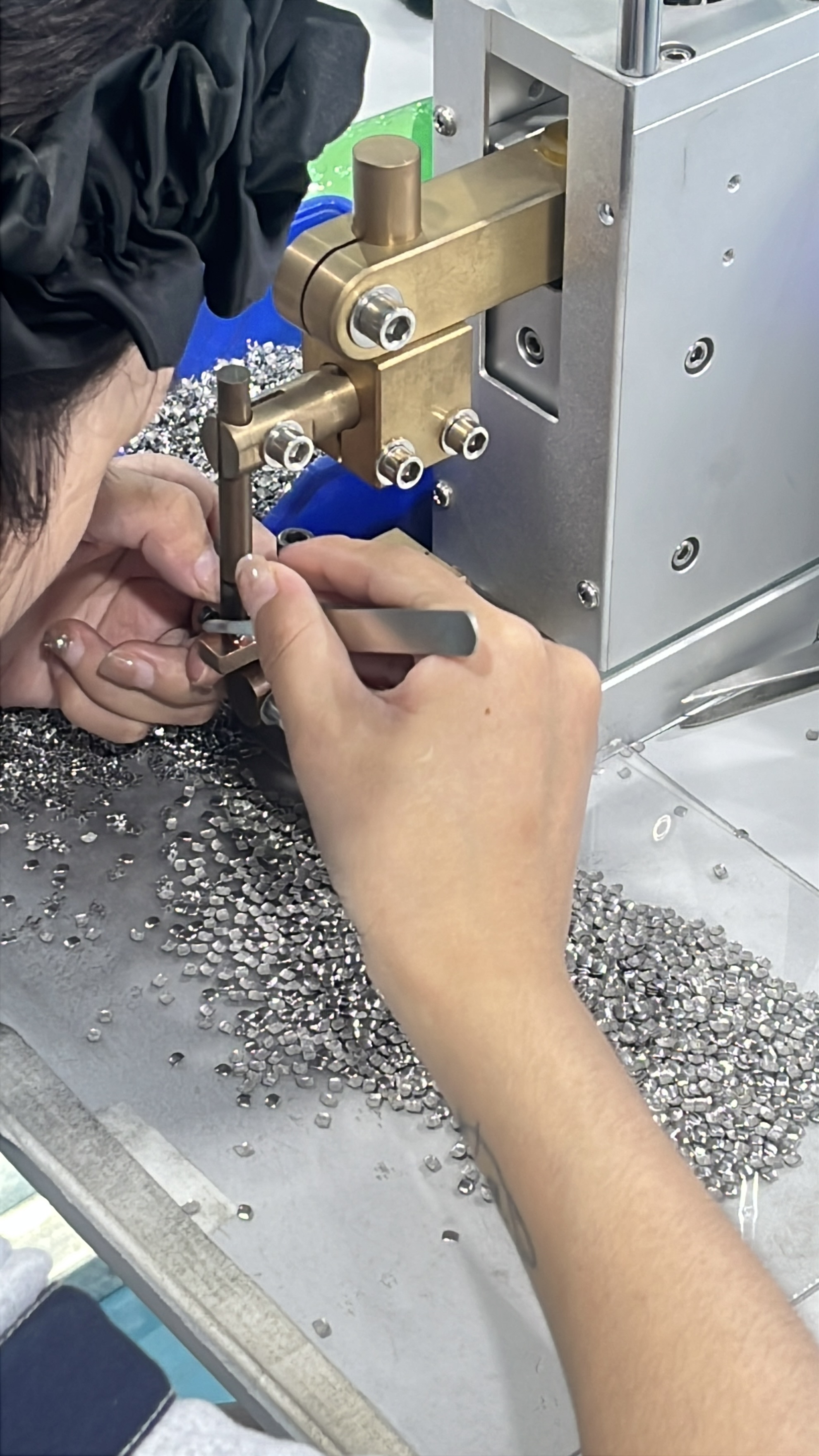
Bracket body positioning in production. Placement accuracy at the chair depends on the bracket transferring what was documented at manufacture.
Positioning. Yortho lists a double-ended bracket positioning gauge, model Y-X101, specified at 0.022″ with a 2.0–5.0 mm range. Because the gauge is tied to one slot size, bracket order and positioning instrument have to be checked against each other. This is exactly the detail that slips when two bracket categories are ordered in the same cycle.
Posterior access. Tube tweezers, model Y-X203 with a long tip, are listed for posterior brackets and buccal tubes. If the clear line is being added to a practice that already runs a metal line, check that the existing posterior instruments still suit the new bracket geometry rather than assuming they carry over.
Ligation. Both Yortho bracket models named earlier are self-ligating, so the ligation method does not separate the two lines within this catalogue — a useful correction for clinics that assume “clear” automatically means a different tie-in technique. What can separate them is auxiliary stock: elastic ligatures (Y-S80201) and power chains (Y-S80101) are separate SKUs, and the buyer should confirm with the supplier which auxiliaries a given technique requires rather than assuming they are included in the bracket order.
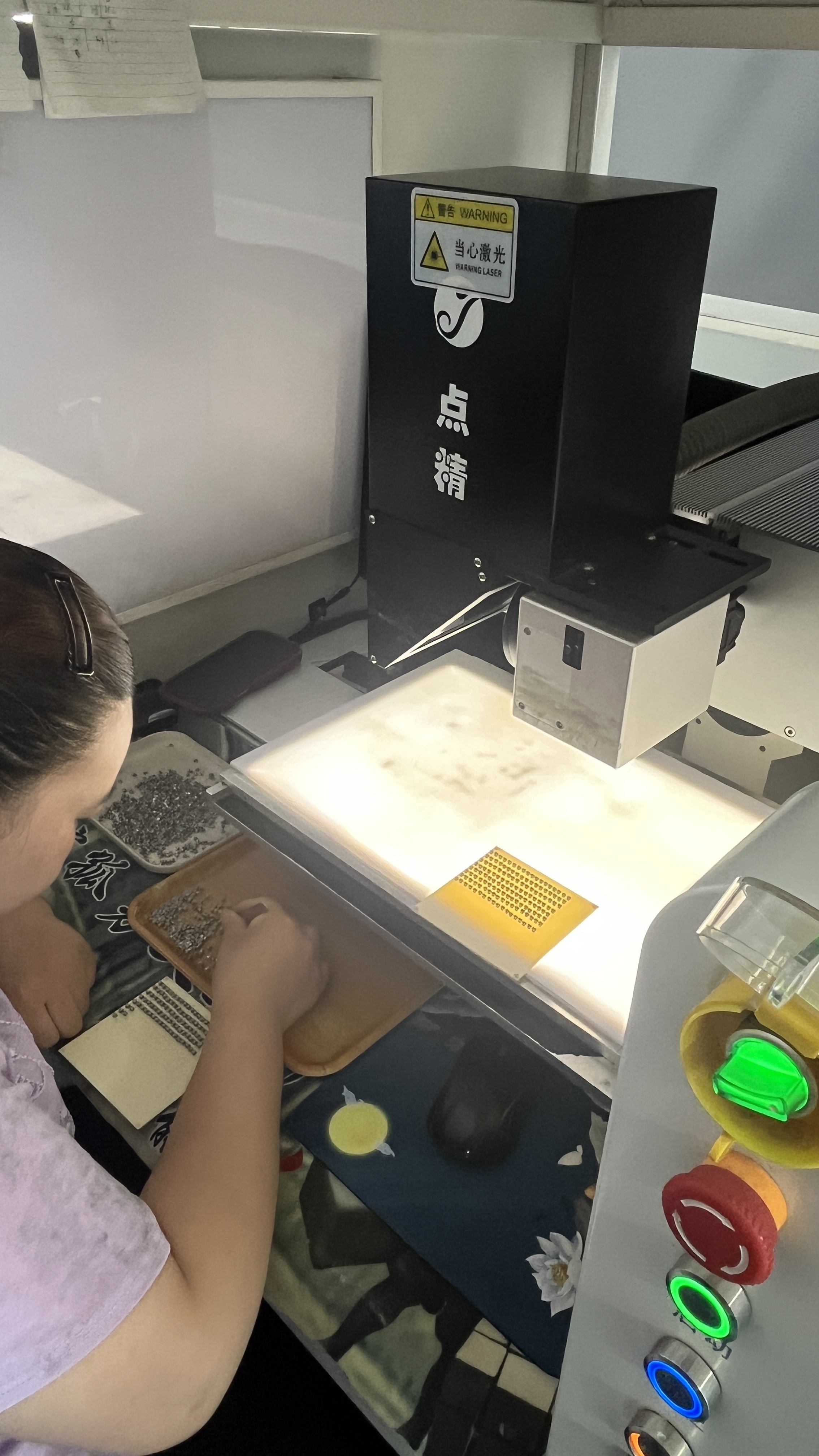
Marking on the bracket base. Identification is what allows a delivered bracket to be traced back to its model and specification.
Ceramic body handling. Whatever the visual advantage, a ceramic bracket has its own requirements at bonding and removal. Ask the supplier for written bonding and debonding guidance together with torque and prescription data, and confirm that the clinic's protocol matches it. That is a documentation request, not a claim about any specific product's behaviour.
Instrument tray. Reusable pliers in the Yortho range are specified with hardness between HRC 50 and HRC 63 depending on model, and a maximum sterilization temperature of 180 °C. Those figures matter when the tray is planned around a new bracket line, because sterilization cycles are a maintenance variable for every reusable tool at the chair.
Inventory and Procurement Planning
Inventory is where the two categories diverge most sharply, and where the label-versus-specification problem turns into money.
Reconcile by model code, not by label. Yortho's catalogue lists the Y-C2 Mini Self-ligating Ceramic Bracket under both “Clear Orthodontic Brackets” and “Ceramic Self-ligating Brackets”. Two catalogue entries, one model. A buyer counting SKUs from category labels will over-order; a buyer counting from model codes will not.
Match the slot family across the whole kit. Bands, buccal tubes and arch wires are ordered against the same slot decision as the bracket. Yortho's stainless steel arch wires (Y-SS) run from 0.012″ to 0.020″ across round and rectangular cross-sections and six arch forms, packed ten pieces per pack. Wire inventory is therefore sized by slot and arch form, not by bracket category — which is why the bracket decision and the wire decision should not be made in separate meetings.
Order quantities. Yortho's standard terms set a MOQ of USD 1,000 in total for a formal order, with no MOQ on a first order; OEM customisation carries a MOQ of 500 units and ODM of 1,000 units. For a clinic adding a clear line to an existing metal line, the first-order exemption is what makes a two-category trial possible without committing to a full shelf.
Samples. Samples are offered for quality checks; most are free except higher-cost items such as pliers and self-ligating brackets, with the buyer covering freight. Since both bracket lines in this comparison are self-ligating, budget for chargeable samples instead of assuming free evaluation units — and use those samples to check slot fit against the bands, tubes and wires already in stock.
Lead time and freight. Standard products held in Yortho's warehouse can be packed and dispatched within 3 business days after payment confirmation. Quoted transit windows are 3–7 business days by express courier, 7–12 days by air freight, 25–40 days by sea and 20–30 days by rail or overland for regions such as Europe and Central Asia. A clear-bracket top-up that has to arrive before a case starts is a courier decision, not a sea-freight decision.
Documentation per shipment. Certificates and test reports should travel with the order. Yortho states CE certification under the EU MDR, FDA registration and ISO quality management system certification; ISO 13485:2016 is the QMS standard most buyers ask to see, and ISO 10993-1:2018 is the biological evaluation framework commonly requested for intra-oral materials. Keep one file per bracket model rather than one file per supplier.
Side-by-Side Comparison
| Decision dimension | Mini orthodontic brackets | Clear orthodontic brackets |
|---|---|---|
| What the label specifies | Reduced bracket footprint; a dimensional description | Visual discretion; ceramic body on the Yortho clear model |
| What the label does not specify | Slot size, prescription, torque, material grade, bonding base | Slot size, prescription, torque, material grade, bonding base |
| Yortho catalogue model | Y-M2 Mini Self-ligating Bracket (mini line); Y-M1 Mini Bracket listed under Metal Orthodontic Brackets | Y-C2 Mini Self-ligating Ceramic Bracket |
| Case-mix signal to stock | Routine case flow plus cases where the clinician specifies a reduced-profile bracket | Predictable share of esthetic-led adult cases |
| Chairside check | Positioning gauge Y-X101 is specified at 0.022″; confirm slot match | Request written bonding and debonding guidance plus torque data |
| Attachment compatibility | Must match Y-H6002 bands and Y-T1 buccal tubes — Roth or MBT, 0.018″ or 0.022″ | Same requirement; the slot decision governs the whole kit |
| Standards to request | ISO 27020:2019 test reporting, ISO 13485 QMS evidence, ISO 10993-1 biocompatibility | Same standard set, separate product file |
| Main inventory risk | Slot and prescription duplication across an inherited product mix | Label and model duplication (Y-C2 sits under two catalogue labels) plus variant depth |
Decision Checklist for Orthodontic Buyers
- Define the case mix before opening the catalogue. Estimate the share of esthetic-led cases and the share where a reduced-profile bracket is specified.
- Separate the two labels. Treat “mini” as footprint and “clear” as appearance, and check whether one model satisfies both.
- Require a data sheet per model. Slot size, prescription or system, torque, material and bonding base must be written down.
- Fix the slot family first. Brackets, bands, buccal tubes and arch wires must agree on 0.018″ or 0.022″ and on Roth or MBT before any line item is added.
- Reconcile labels against model codes. Count SKUs by model, so a bracket listed twice is not ordered twice.
- Ask for test reporting against ISO 27020:2019 and for QMS evidence to ISO 13485:2016.
- Confirm market-access documents per destination — CE marking under the MDR for the EU, FDA registration and listing for the United States — and keep the files per product, not per supplier.
- Price by model and configuration, not by category, so metal and ceramic offers are compared on the same basis.
- Sample both self-ligating lines and use the samples to verify slot fit against attachments already in stock.
- Set reorder points by model and build the transit window into the plan, not into the case schedule.
Where Yortho Sits in This Decision
Yortho is a UK brand belonging to YAM Global Limited, operating its own factory in Asia through Zhejiang YO Medical Technology Co., Ltd. The company reports a 5,000 m² facility with around 100 employees, a 20-engineer R&D team and an annual output of 30,000,000 units, with roughly 80% of production exported to markets including the EU, the USA, the Middle East, Australia and Africa.
For this comparison, the relevant part of the range is the bracket and attachment set: the Y-M2 Mini Self-ligating Bracket, the Y-C2 Mini Self-ligating Ceramic Bracket, Y-H6002 first molar bands, Y-T1 buccal tubes, Y-SS stainless steel arch wires, elastic ligatures, power chains, and the pliers and positioning instruments that support them. OEM and ODM services are available, which matters if a distributor wants its own labelling across a two-category bracket range rather than a single line.
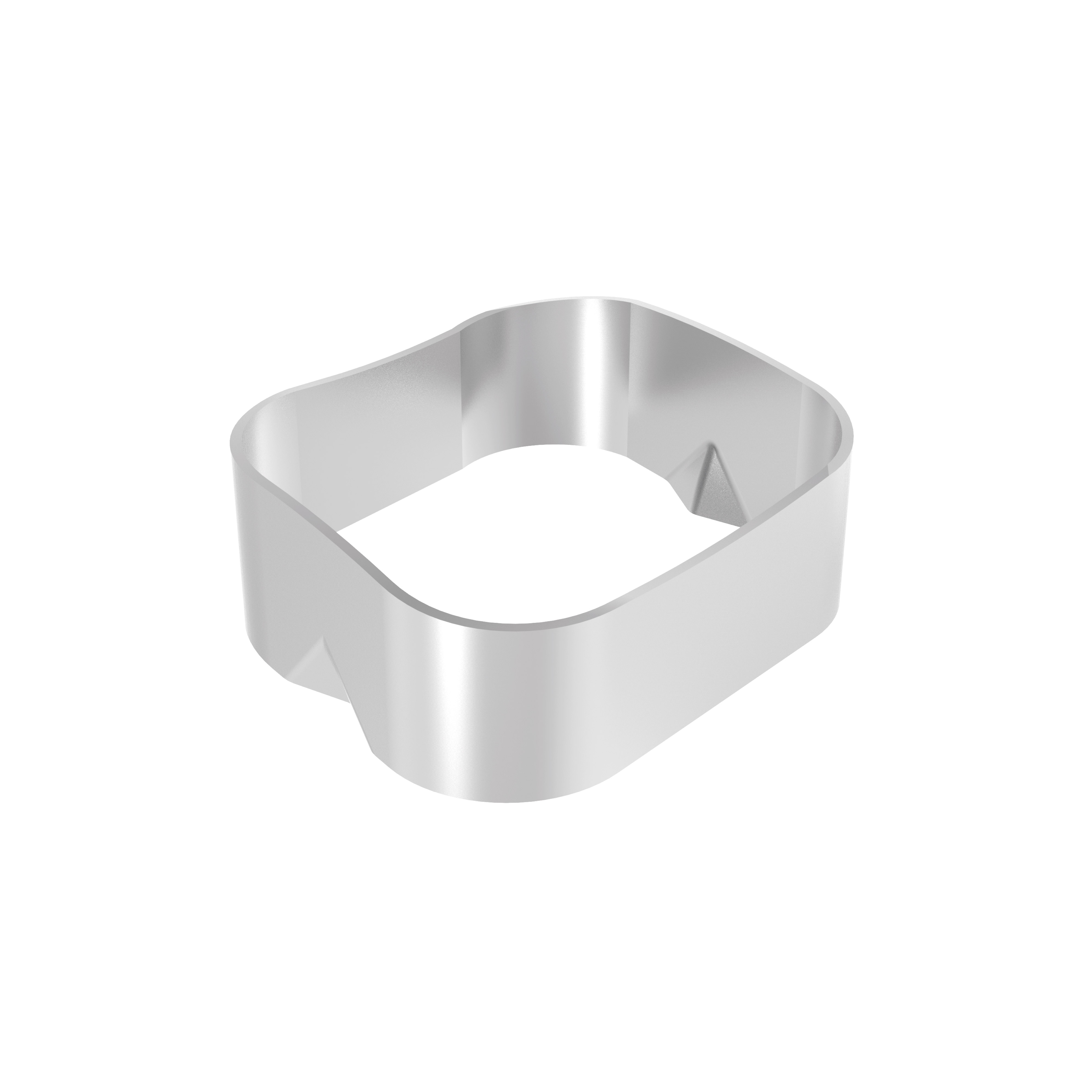
Y-H6002 first molar band. Attachment choice is fixed by the slot family selected for the bracket.
Certification status is stated as CE under the EU MDR, FDA registration and ISO quality management system certification. Buyers should still take the standard step of matching each certificate to the exact model being purchased, since that is what a compliant purchasing file requires.
Product details, model codes and the current catalogue can be reviewed at Yortho, and the full company brochure is available for download: Yortho product and company brochure (PDF).
Frequently Asked Questions
How should a buyer evaluate orthodontic materials manufacturers for a mini or clear bracket order?
Start with documents rather than catalogue pages. Confirm the legal manufacturing entity and site, then ask for product-scope certificates, test reporting against ISO 27020:2019 for the brackets and tubes, quality management system evidence to ISO 13485:2016, and the market-access documents for each destination you sell into. A 2024 peer-reviewed study examined the quality and accuracy of information published on the websites of orthodontic product providers, which is a reminder that supplier web content works best as a lead source, not as a specification. Finish with physical samples to verify slot and prescription.
Are mini and clear brackets interchangeable in a case list?
Not as categories. “Mini” refers to reduced bracket footprint and “clear” refers to visual discretion, usually through a ceramic body, so a single model can be both — as with the Y-C2 Mini Self-ligating Ceramic Bracket. Interchangeability depends on whether the two products share slot size, prescription and torque, which has to be checked on the data sheet rather than assumed from the name.
What must the specification sheet state before either category is ordered?
Five items at minimum: slot size, prescription or appliance system, torque values, material, and bonding base design. Add packaging configuration, because buccal tubes and bands are frequently supplied as sets. Then compare those items against the bands, tubes and arch wires already in stock; a bracket that does not match the existing slot family creates a second inventory rather than an addition to the first.
What are the order quantities and lead times for a first bracket order?
Yortho's standard terms set a MOQ of USD 1,000 in total for a formal order, with no MOQ on a first order; OEM customisation carries a MOQ of 500 units and ODM of 1,000 units. Standard products held in stock can be packed and dispatched within 3 business days after payment confirmation. Transit is quoted at 3–7 business days by express, 7–12 days by air, 25–40 days by sea and 20–30 days by rail or overland for regions such as Europe and Central Asia.
Can samples of both bracket categories be requested before committing?
Yes. Samples are offered for quality checks; most are free except higher-cost items such as pliers and self-ligating brackets, with the buyer covering courier freight. Because both bracket lines in this comparison are self-ligating, plan for chargeable samples. Use them to test slot fit against the attachments already in the clinic, and to compare bracket footprint and finish side by side before the first bulk order.
What after-sales support applies, and what is the next step?
Yortho provides after-sales service on all orders and resolves product issues through that channel, which is the point at which a two-category bracket range should be tested: a supplier that supports one line well is more likely to support a second. The practical next step is to request samples of the Y-M2 and Y-C2 lines together with the current catalogue and certificates, so the slot decision and the esthetic decision are made on the same evidence. Enquiries can go to info@yortho.com or +86 180-5879-3627.
Conclusion
Mini and clear orthodontic brackets belong to two different conversations: how much space the appliance occupies, and how visible it is. Treated as substitutes, they produce mismatched kits and duplicated SKUs; treated as two axes of one specification, they let a clinic serve both a volume case flow and an esthetic-led patient base from a single, consistent slot family. The buying rule is unglamorous but reliable: define the case mix, fix the slot family, require a data sheet per model, and sample both lines before the first bulk order.

Yortho manufacturing base. Request samples, certificates and the current catalogue before finalising a two-category bracket order.
Have Questions or Need More Details?
Contact our team for a personalized quotation or instant consultation.
Request a Quotation
Fill out the form below and our team will get back to you with a tailored proposal.
WhatsApp Direct Chat
Prefer to chat in real-time? Message us on WhatsApp for instant assistance & quick answers.
- Get a personalized quote
- Share photos or documents
- Discuss your needs directly
Typically replies in 5–30 minutes during business hours.