Solving Compliance Headaches with Pre-Verified Orthodontic Buccal Tubes
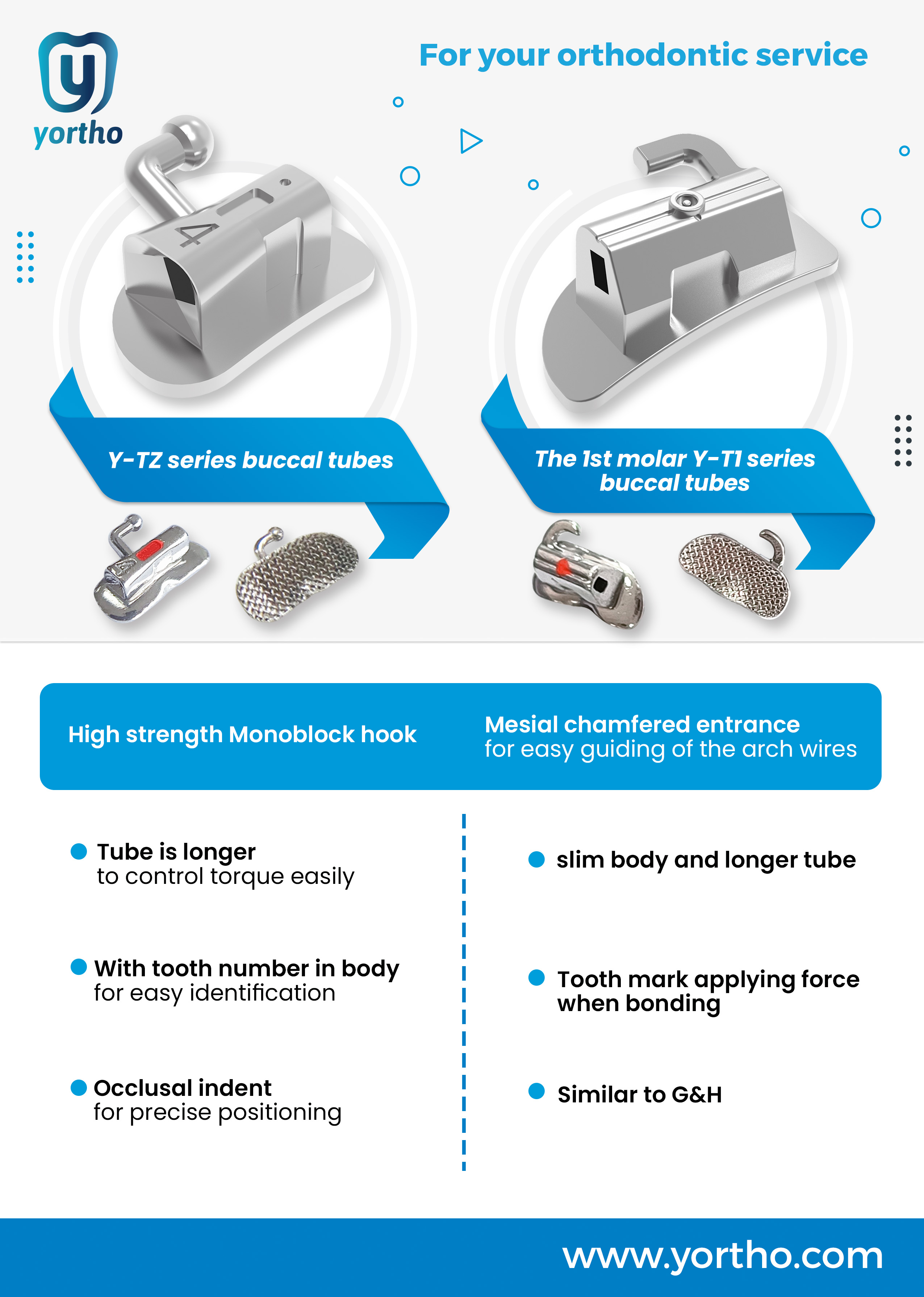
Yortho buccal tubes: molar attachment geometry, positioning marks and base design in one range.
Most buccal tube compliance problems do not start in a certificate. They start at the chair: a tube that seats slightly off on the second molar, a mesial inlet that resists the archwire instead of guiding it, or a document pack that turns up three weeks after the goods. Each of those events costs chair time and converts a routine molar attachment into a rework case.
Pre-verification moves that risk upstream. Instead of auditing a supplier after a failed batch, the buyer confirms documentation, geometry and the actual production source before the purchase order is released. This article sets out how dental labs, clinic groups and importers can apply that model to orthodontic buccal tubes, using Yortho's published product data and its documentation position as a working example that buyers can adapt to any supplier.
Problem Definition: Why Molar Attachments Cause Compliance Headaches
A buccal tube is the molar attachment that receives the terminal end of the archwire and transfers force to the posterior segment. It is a small, low-cost part carrying a disproportionate share of treatment risk, because a tube that is bonded a fraction of a millimetre away from its intended position changes the force vector for the whole arch. The compliance headache is therefore rarely one single defect. It is a chain of five small failures.
Headache 1: Documentation that arrives after the goods
Labs and distributors need certificates and test reports for registration, customs and internal quality files. When a supplier can only supply paperwork after shipment, the buyer carries the delay. Yortho's stated position is to provide ISO, CE (MDR) and FDA registration documentation, and to send full PDF copies of test reports and certificates on request, with the note that the required document set depends on the importing country.
Headache 2: Bonding position drift
Positioning error is the most expensive defect in a buccal tube, because it is only visible after bonding. Yortho's published data states that an occlusal indent combined with tooth marking limits bonding deviation to ≤0.05 mm, and that the occlusal edge of the mesh base carries a buccal groove for positioning.
Headache 3: Insertion resistance and chair time
A tube that grips the wire adds minutes to every archwire change. Yortho's comparison data states that the chamfered triangular mesial inlet reduces archwire insertion resistance by 30% against comparison products, and that a 15% slimmer body may reduce oral discomfort for patients.
Headache 4: Not knowing who actually manufactures the part
Many buccal tubes are sold through intermediaries, which makes traceability difficult when a batch needs investigation. Yortho is an orthodontic brand of YAM Global Limited, operating its own factory in Huzhou, Zhejiang Province, China, through Zhejiang YO Medical Technology Co., Ltd. The published facility profile lists a 5,000 m² plant, 100 employees, 20 R&D engineers and an annual output of 30,000,000 units.
Headache 5: Batch-to-batch variation
Consistency is what a quality file cannot show. Yortho's comparison material states that its buccal tubes are produced by precision casting with high-precision moulds, that clinical operation and bonding are straightforward, and that process specifications are aligned with G&H benchmarks while batch consistency is positioned as better than mainstream alternatives. That is a first-party claim, and buyers should test it against their own sample lots rather than accept it on presentation alone.
Industry Background: Why Fixed-Appliance Sourcing Is Under More Documentation Pressure
Demand is not the constraint. Grand View Research valued the global orthodontic consumables market at USD 3.1 billion in 2024 and projects USD 4.3 billion by 2030. Fortune Business Insights expects the buccal braces segment to capture 89.55% of market share by 2026, which reflects how much treatment still runs through labial brackets and molar tubes. Grand View Research further notes that orthodontic clinics and standalone practices represent over 50% of the end-user distribution channel, so most purchasing decisions sit with small, documentation-sensitive buyers rather than central procurement teams.
The standards that actually apply
- ISO 13485:2016 is the quality management system standard for medical device manufacturers and is the baseline for international market access.
- EU MDR 2017/745 governs CE marking of orthodontic appliances in Europe; CE under the new EU MDR is part of Yortho's stated certification position.
- US FDA classifies orthodontic brackets as Class II devices requiring 510(k) clearance, and recognises ISO 13485:2016 as the primary basis of its Quality Management System Regulation.
- MDSAP lets manufacturers cover the QMS requirements of five jurisdictions through a single audit, which matters for suppliers shipping into several markets at once.
- Material risk: nickel and chromium are the primary allergens of concern in metal orthodontic appliances, which is why material and surface documentation belongs inside the compliance conversation rather than beside it.
None of these frameworks tells a lab whether the specific lot in front of it will bond where it should. That gap between framework compliance and lot-level confidence is exactly where pre-verification sits.
Detailed Solution: What a Pre-Verified Buccal Tube Programme Looks Like
The working principle is simple: verify the supplier on the same dimensions you will be judged on clinically, and do it before the order. Five pillars carry the model.
Pillar 1 — Documentation before the purchase order
Ask for the certificate pack as part of the quotation, not as part of the delivery. In practice that means ISO, CE (MDR) and FDA registration plus the test reports that sit behind them, matched to the destination market. A supplier that cannot produce them at quotation stage is telling you something useful about the relationship.
Pillar 2 — A locked prescription, not a generic SKU
Buccal tubes are prescription-specific parts. The Yortho range is published as Y-T1 Buccal Tube and Y-T2 Self-ligating Buccal Tube, both in stainless steel, available in Roth or MBT systems, low or high torque, and slot 18 or 22. Locking those four variables before ordering removes the most common source of mismatch between what a clinic expects and what arrives.
Pillar 3 — Geometry that removes chairside guesswork
Three design points do most of the work. The occlusal indent and tooth marking limit bonding deviation to ≤0.05 mm and reduce misalignment risk. The chamfered triangular mesial inlet cuts archwire insertion resistance by 30% against comparison products. The extended tube increases effective length by 20%–25%, which supports torque control in the posterior segment. A 15% slimmer body is also cited as a way to reduce patient discomfort.
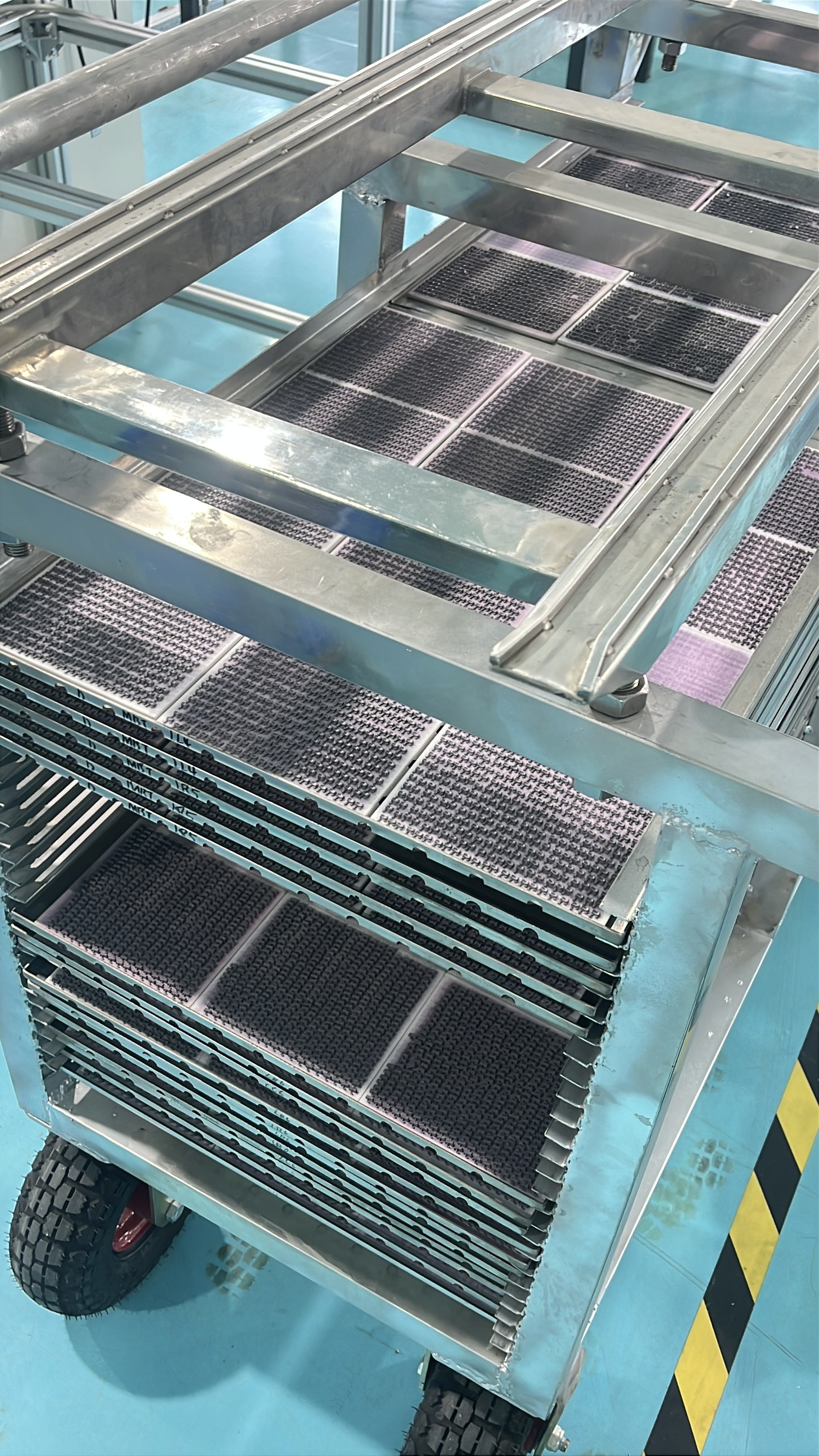
Buccal tube body and base: the mesial inlet and occlusal indent are the two features buyers should inspect on a sample lot.
Pillar 4 — Manufacturing control at the source
Precision casting with high-precision moulds is the stated production route, and it is what allows firm bonding and predictable clinical handling. Source control also has a commercial dimension: the Yortho facility profile lists a 5,000 m² plant, 100 employees and 20 R&D engineers, with 80% of output exported to markets including the EU, USA, Middle East, Australia and Africa, and products shipped to over 70 countries. Zhejiang is also listed among China's leading dental instrument export provinces, alongside Guangdong and Jiangsu.
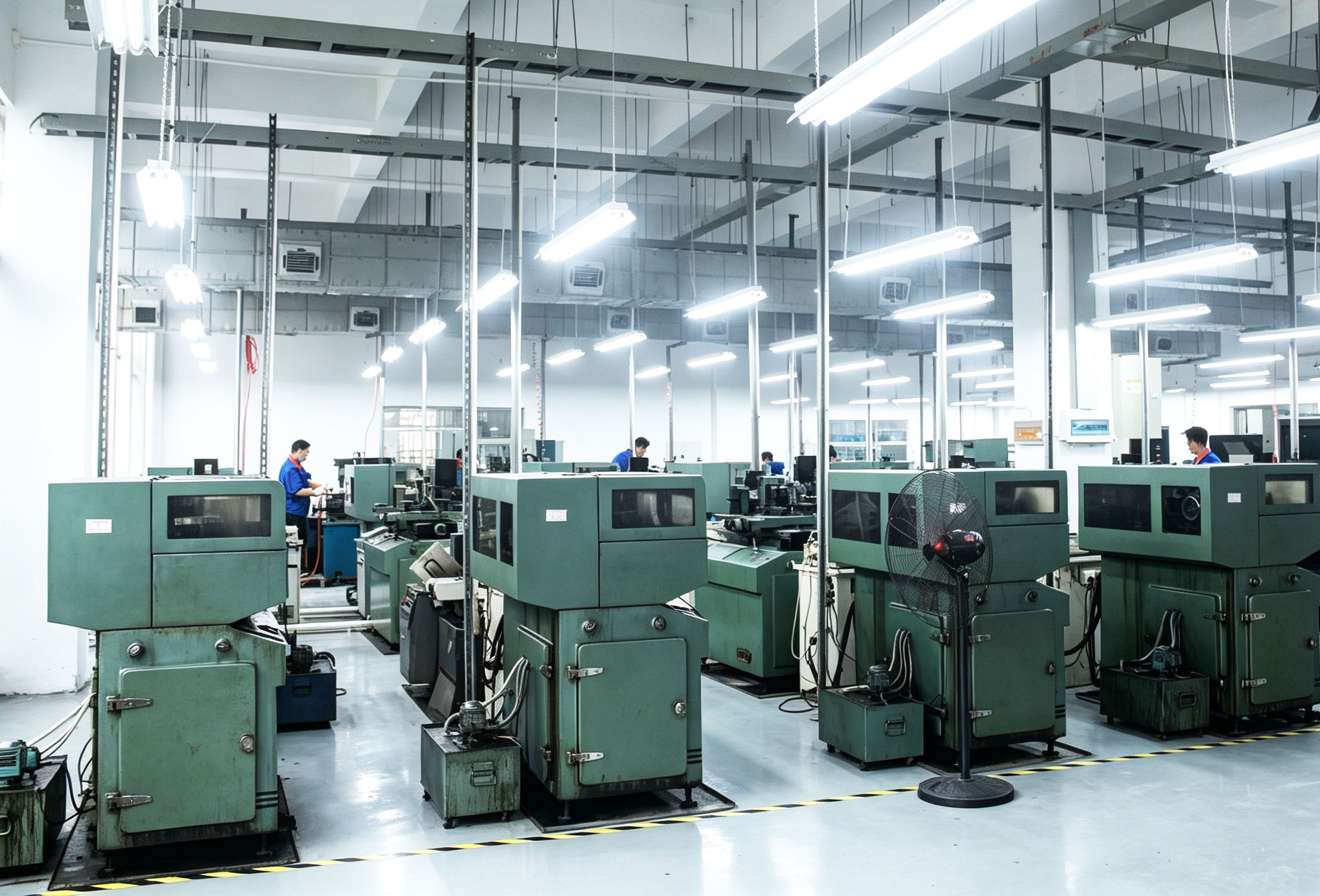
Shared operating area inside the Yortho factory in Huzhou, Zhejiang Province, where buccal tubes, brackets and bands are produced.
Pillar 5 — Commercial terms that match the risk
Verification only works if the first order is small enough to test and the repeat order is predictable. Yortho publishes a USD 1,000 total minimum for formal standard-product orders, with no MOQ applied to the first order; OEM and ODM minimums are 1,000 units and 500 units respectively. Standard products are held in stock and can be packed and dispatched within 3 business days after payment confirmation. On cost, Yortho's published comparison data positions its buccal tubes at 30% lower cost than other buccal tubes, a figure buyers should still check against their own quotation.
Step-by-Step Breakdown: A Six-Step Pre-Verification Protocol
Step 1 — Define the molar attachment prescription
Write down the system (Roth or MBT), slot size (18 or 22), torque (low or high) and whether a self-ligating tube is required. Confirm whether the tube will be used on a band or bonded directly. A specification that exists only in a clinician's head cannot be verified by anyone.
Step 2 — Request the document pack with the quotation
Ask for ISO, CE (MDR) and FDA registration plus test reports, and state the destination country so the pack matches the importing market. Treat a slow or partial answer as a data point, not a delay.
Step 3 — Test a sample lot against three checkpoints
Check bonding position against the occlusal indent and marking, measure insertion feel with the archwire sizes you actually use, and confirm base fit on the molar. Samples are available from Yortho, with most products supplied free of charge and the buyer covering courier cost.
Step 4 — Confirm the production source and capacity
Verify the manufacturing address, the annual output and the engineering headcount, and ask who owns the tooling if the order is customized. A factory that can describe its own mould and casting process in specific terms is easier to audit later.
Step 5 — Lock commercial and logistics terms
Confirm the minimum order, payment structure and dispatch commitment. Yortho's published terms are T/T payment, 100% in advance as standard, or 30% deposit with 70% before shipment for orders above USD 10,000. Under FOB or CIF terms the buyer handles import duties, taxes and clearance fees.
Step 6 — Inspect on receipt and retain the record
Log the lot, the certificate version and the sample result against the batch you received. That record is what turns a one-off verification into a repeatable procurement standard, and it is the first document anyone will ask for if a rebond pattern appears later.
Use Cases: Where Pre-Verification Pays Off
Multi-site clinic groups standardizing molar attachments
When several sites order independently, small differences in tube specification become visible as inconsistent bonding behaviour. A single locked prescription plus one document pack removes that variance without changing clinical technique.
Dental labs producing for multiple clinics
Labs are asked to justify the materials they use. A pre-verified buccal tube with a traceable certificate pack shortens that conversation and reduces the rework caused by positioning error.
Importers and distributors handling registration
Registration and customs work depend on documents that must match the importing market. Confirming ISO, CE (MDR) and FDA registration before the order is placed protects the shipment schedule rather than the supplier's.
Practices moving to self-ligating mechanics
Y-T2 Self-ligating Buccal Tube is published in the same Roth or MBT, low or high torque, slot 18 or 22 configuration as the conventional Y-T1, which allows a practice to change the ligation method without reopening the prescription decision.
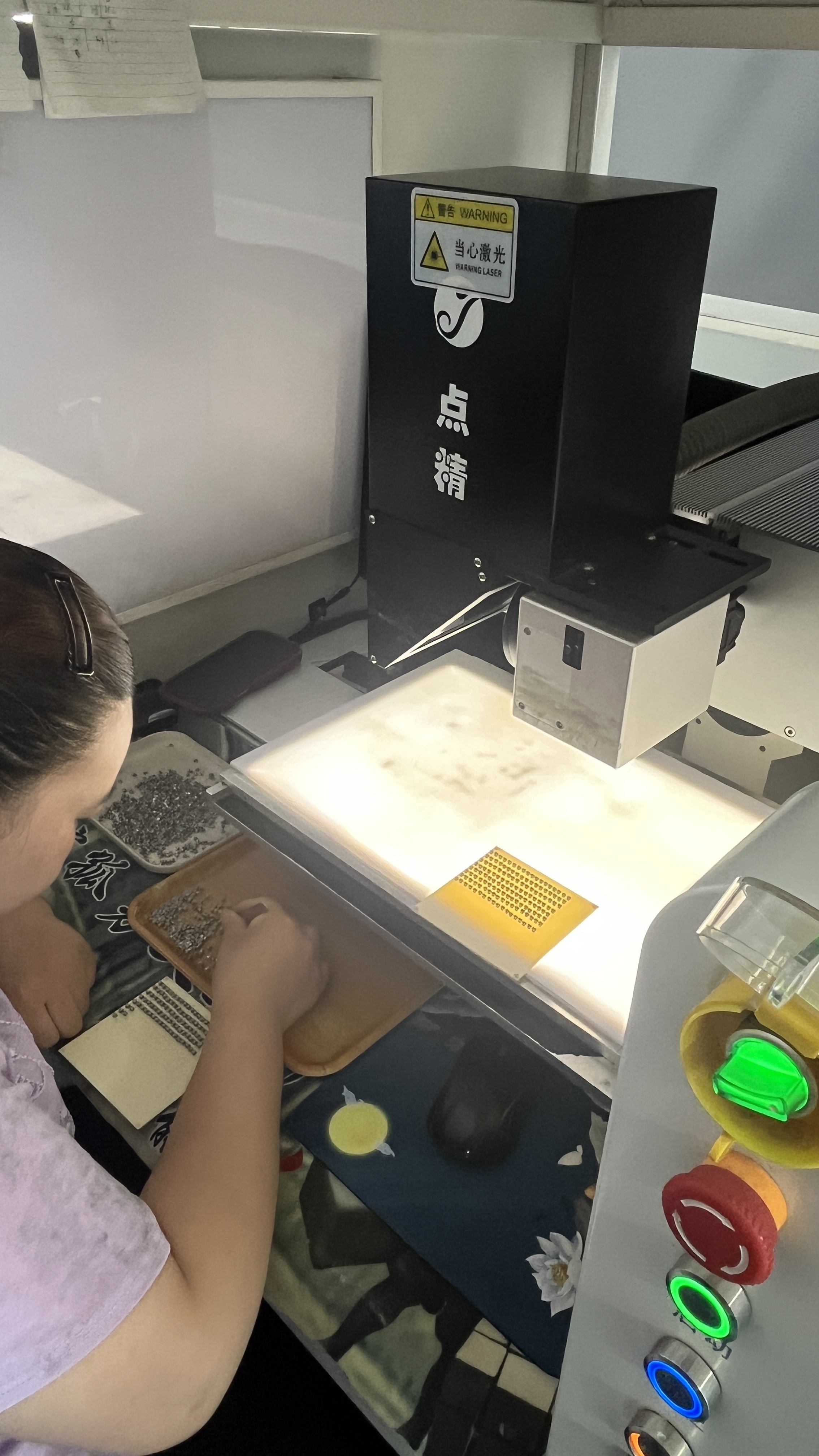
Marking on a bracket base during production. Traceable marking is the same discipline a lab should demand for buccal tube batches.
Comparison Table: Yortho Buccal Tubes and Conventional Buccal Tubes
The table below reproduces Yortho's published comparison points for its buccal tube range. It is first-party product data, not an independent laboratory study, and it should be read alongside your own sample results.
| Comparison point | Yortho buccal tube | Comparison basis stated | Procurement implication |
|---|---|---|---|
| Mesial inlet geometry | Chamfered triangular mesial inlet | Facilitates archwire insertion versus other buccal tubes | Faster archwire seating at the chair |
| Archwire insertion resistance | 30% lower | Versus comparison products | Less manipulation and less risk of wire damage |
| Bonding deviation | ≤0.05 mm, via occlusal indent and tooth marking | Stated to reduce misalignment risk | Fewer rebonds and fewer repeat visits |
| Effective tube length | 20%–25% longer | Stated to support torque control | More predictable posterior torque expression |
| Body width | 15% slimmer | Stated to reduce oral discomfort | Fewer soft-tissue complaints from patients |
| Cost position | 30% lower | Versus other buccal tubes | Budget headroom for documentation and inspection |
| Batch consistency | Positioned as better than mainstream alternatives | Process specifications aligned with G&H benchmarks, first-party claim | Fewer differences between successive lots |
Published specification range
| Model | Type | System | Torque | Slot size | Material |
|---|---|---|---|---|---|
| Y-T1 Buccal Tube | Metal buccal tube | Roth, MBT | Low torque, high torque | 18, 22 | Stainless steel |
| Y-T2 Self-ligating Buccal Tube | Metal self-ligating buccal tube | Roth, MBT | Low torque, high torque | 18, 22 | Stainless steel |
Frequently Asked Questions
What documentation should a buccal tube supplier provide before shipment?
Yortho holds ISO, CE (MDR) and FDA registration, and can send full PDF copies of test reports and certificates before an order is confirmed. Buyers should also state the destination country, because local customs requirements differ and the document pack has to match the importing market rather than the exporting one.
Can buccal tubes be customized to a specific prescription?
Yes. Yortho offers OEM and ODM services: ODM covers adapting existing designs with your branding or minor feature changes, while OEM covers fully customized production to your specifications. The published minimum order is 1,000 units for ODM and 500 units for OEM. For the standard range, Y-T1 and Y-T2 buccal tubes are supplied in Roth or MBT systems, low or high torque, slot 18 or 22, in stainless steel. When evaluating a Chinese manufacturer, ask for the production address, the certificate pack and these minimums before discussing price.
What is the minimum order and how is payment structured?
The published policy is a USD 1,000 total for a formal standard-product order, with no MOQ applied to the first order. Payment is by T/T: 100% in advance as standard, or 30% deposit with 70% before shipment for orders above USD 10,000. Yortho's published comparison data states that its buccal tubes are positioned at a 30% lower cost than other buccal tubes; buyers should verify this against their own quotation and sample results.
Can we request samples before placing an order?
Yes. Samples are available for quality checks; most products are supplied free of charge, with high-cost items such as pliers and self-ligating brackets excluded, and the buyer covers courier cost. If you have a DHL, FedEx or UPS account, shipment can be arranged collect; otherwise the supplier quotes freight against your address and postcode. A practical sample test covers bonding position, archwire insertion and fit on the molar.
What is the lead time and what shipping options are available?
Standard products are held in stock, so orders can be packed and dispatched within 3 business days after payment confirmation. Transit then depends on the method: express courier 3–7 business days, air freight 7–12 days, sea freight 25–40 days, and rail or overland freight 20–30 days for regions such as Europe and Central Asia. Under FOB or CIF terms the buyer is responsible for import duties, taxes and clearance fees. To start a pre-verification pack or a quote, send your prescription, destination country and target volume to info@yortho.com.
Conclusion
Compliance headaches around orthodontic buccal tubes are seldom caused by the metal. They come from documentation that lags the shipment, positioning that only shows up after bonding, insertion friction that consumes chair time, and a supply chain the buyer cannot see into. Pre-verification addresses all four by moving the checks in front of the purchase order: certificate pack first, prescription locked second, sample tested third, source confirmed fourth, and commercial terms written to match the size of the risk.
For a lab or clinic group, the practical output is a one-page verification record per supplier — system, slot, torque, bond-check result, certificate version and lead-time commitment. That page does more for a procurement file than any brochure claim, and it can be rebuilt quickly if a supplier changes.
Next Step: Request a Pre-Verification Pack
Yortho can supply buccal tube samples, the ISO, CE (MDR) and FDA documentation pack, and a quotation built around your prescription and destination market. Standard orders dispatch within 3 business days after payment confirmation, and the first order carries no MOQ.
Email: info@yortho.com | WhatsApp: +86 180-5879-3627 | Website: www.yortho.com
Download the product catalogue (PDF): Yortho Catalogue

Yortho — orthodontic brackets, buccal tubes, bands, pliers, auxiliaries and dental lab appliances.
Have Questions or Need More Details?
Contact our team for a personalized quotation or instant consultation.
Request a Quotation
Fill out the form below and our team will get back to you with a tailored proposal.
WhatsApp Direct Chat
Prefer to chat in real-time? Message us on WhatsApp for instant assistance & quick answers.
- Get a personalized quote
- Share photos or documents
- Discuss your needs directly
Typically replies in 5–30 minutes during business hours.