
Evaluating Orthodontic Materials: Compliance, Alloys and Clinical Fit
Evaluating Orthodontic Materials: Compliance, Alloys and Clinical Fit
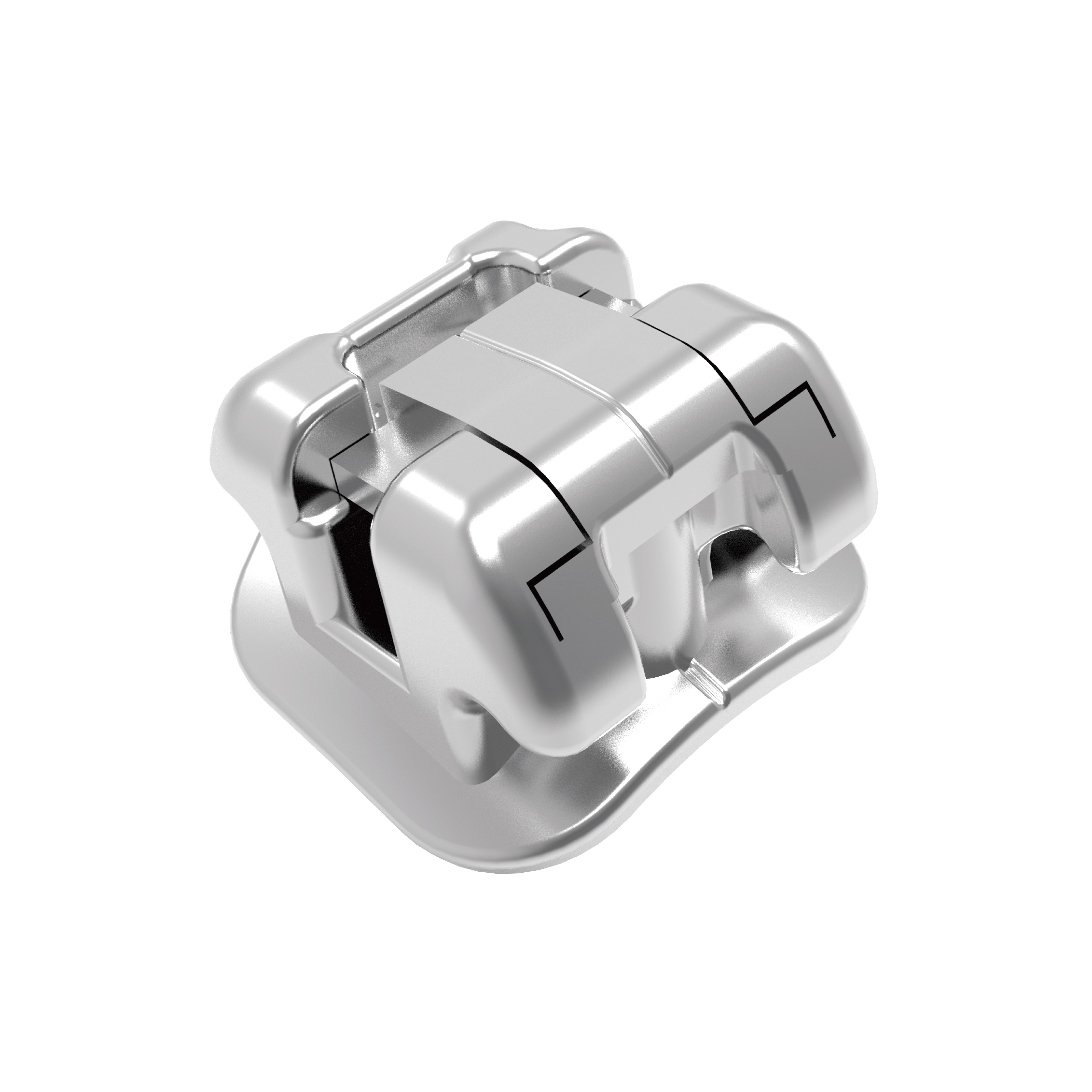
Orthodontic materials are the physical devices and consumables used in fixed and removable orthodontic treatment: brackets, buccal tubes, molar bands, archwires, elastic ligatures, power chains, auxiliary traction parts and the pliers or instruments used to place and adjust them. For clinics and distributors operating at the research or evaluation stage, the practical question is not only which brand to choose but which verifiable specifications make a material acceptable for a specific treatment population and regulatory market.
This article explains the material, design, compliance and sourcing criteria that matter when evaluating orthodontic materials from a manufacturer such as Yortho. Yortho is the orthodontic brand of Zhejiang YO Medical Technology Co., Ltd, a manufacturer based in Deqing, Huzhou, Zhejiang Province, China. The company operates a 5,000 m² production facility with around 100 employees and an annual output of 30 million units; around 80% of production is exported to Europe, the United States, the Middle East, Australia and Africa.
Why Material and Compliance Constraints Should Come Before Price
Orthodontic materials are regulated as medical devices in most mature markets. A supplier quotation becomes meaningful only when the product can be traced to defined materials, manufacturing processes, finished-product testing and registration documents. Buyers evaluating suppliers should therefore separate three constraint layers: clinical compatibility, material and design traceability, and regulatory documentation.
A missing or mismatched constraint can create practical problems after the order arrives. A bracket with the wrong slot dimension may not accept the clinical archwire sequence. A band with an incompatible tube configuration extends chair time. A supplier without the correct export or registration documentation delays customs clearance. These are not marketing concerns; they are procurement risks.
Yortho states compliance with international medical device requirements through FDA registration, ISO quality management system certification and CE certification under the new EU MDR framework. FDA registration number 3030680214 has been issued by the U.S. FDA / CDRH for a defined scope of general dental and orthodontic devices, including brackets, bands, buccal tubes, archwires, ligatures, instruments and auxiliary products. The applicable U.S. registration standard is 21 CFR Part 807.
.jpg "FDA registration documentation")
For China export controls, an example is the Certificate for Exportation of Medical Products issued by Zhejiang Medical Products Administration for orthodontic pliers, with certificate number Zhehang Food & Drug Admin Medical Device Export 20250496. Regulatory documentation should be checked against the product family and destination market, not accepted as a single company-wide statement.
Brackets: Slot, System, Alloy and Base Are Interdependent
A bracket transmits forces from the archwire to the tooth. In procurement terms, the bracket specification sheet is a contract between the clinical protocol and the product. Four data points matter most: slot size (0.018″ or 0.022″), prescription system (Roth, MBT or edgewise), hook configuration, and base design for bonding.
The Y-M1 Mini Bracket is a conventional metal dental bracket made of 17-4 and 304 stainless steel. It is available in slot sizes 0.018″ and 0.022″, with or without hooks, and is compatible with Roth, MBT and edgewise systems. Y-M1 brackets are supplied in complete sets of 20 pieces per set. Its compact low-profile form is intended to reduce irritation to the oral mucosa.
Y-M2 Mini Self-ligating Brackets use a self-ligating structural configuration with a low-friction slot. They are made from 17-4 and 304 stainless steel and are available in slot sizes 18 and 22, with or without hooks, in Roth, MBT and edgewise systems. The product family is also described as Orthodontic Braces and Mini Orthodontic Brackets in registration records. Self-ligating brackets remove the need for elastic or wire ligatures around the slot, which is one reason buyers evaluate them for chair-time efficiency.

Ceramic or clear brackets address aesthetic demand. The Y-C2 Mini Self-ligating Ceramic Bracket is manufactured from polycrystalline or monocrystalline aluminum oxide (Al₂O₃). Monoblock injection molding is intended to produce a smooth surface and stable mechanical strength. The optimized base design is engineered for reliable mechanical bonding strength and to reduce the risk of debonding. Y-C2 is available in slot sizes 18 and 22, with or without hooks, and supports Roth, MBT and edgewise systems. OEM customization is available, and the product is packed one piece per pack.
Buyers comparing metal and ceramic self-ligating brackets should treat the choice as clinical, not merely cosmetic. Ceramic brackets provide an aesthetic advantage, while metal brackets are commonly selected for their established mechanical behavior in sliding mechanics.
Bracket evaluation table for sourcing teams
| Example model | Type | Material | Slot / systems | Configurations |
|---|---|---|---|---|
| Y-M1 Mini Bracket | Conventional metal bracket | 17-4 and 304 stainless steel | 0.018″ and 0.022″; Roth, MBT, edgewise | With or without hooks; 20 pieces per set |
| Y-M2 Mini Self-ligating Bracket | Self-ligating metal bracket | 17-4 and 304 stainless steel | 18 and 22; Roth, MBT, edgewise | With or without hooks; mini profile |
| Y-C2 Mini Self-ligating Ceramic Bracket | Ceramic self-ligating bracket | Polycrystalline or monocrystalline Al₂O₃ | 18 and 22; Roth, MBT, edgewise | With or without hooks; 1 piece per pack; OEM supported |
Buccal Tubes and Bands: Posterior Anchorage Needs Strong Mechanical Evidence
Buccal tubes and orthodontic bands are the posterior anchor points of fixed appliances. They must withstand masticatory forces while providing a precise channel for the archwire. Evaluation should include base retention, material grade, tube design and compatibility with the chosen bracket system.
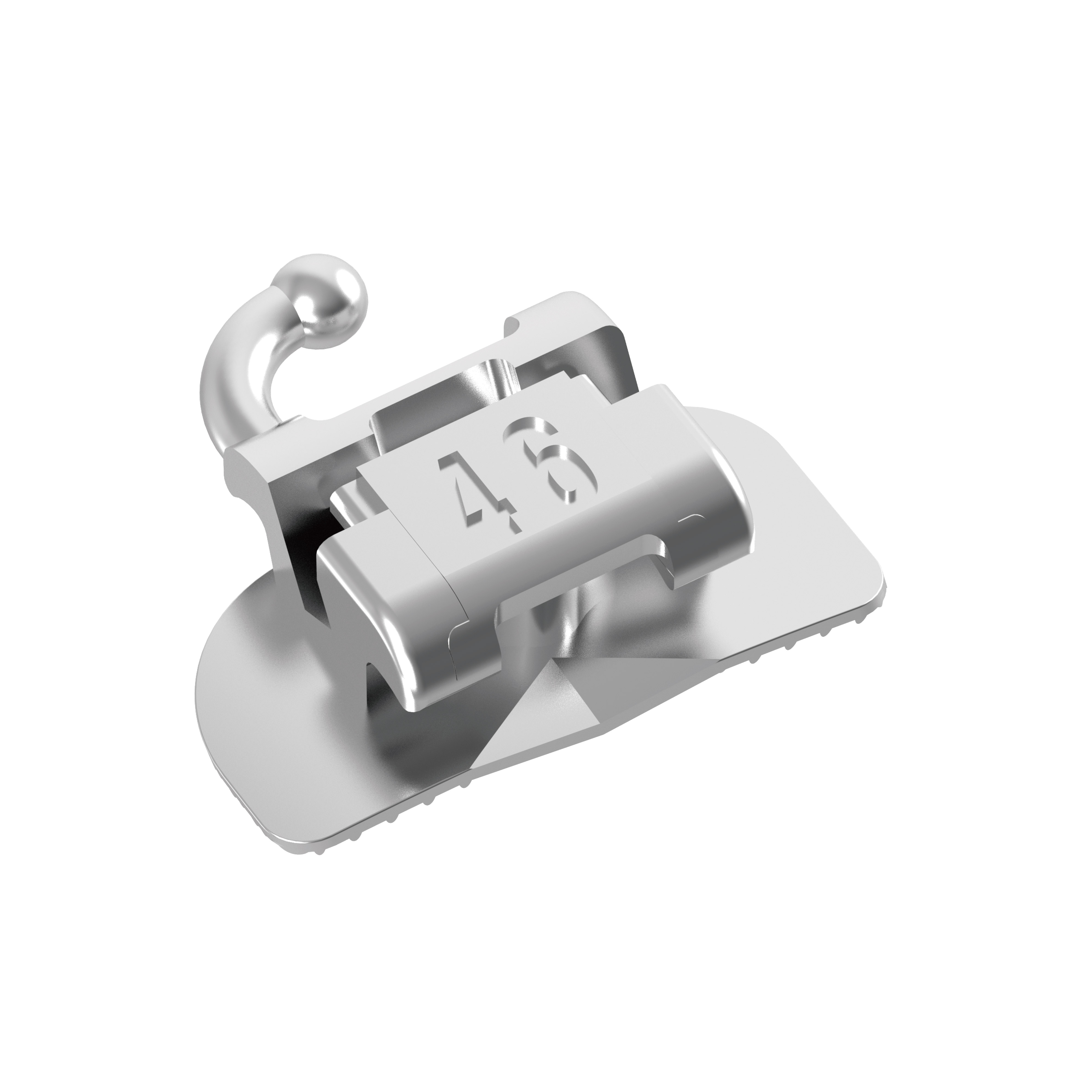
Y-T2 Self-ligating Buccal Tubes are precision-engineered for posterior anchorage. They feature an 80-mesh base with sandblasting, which improves adaptation to the tooth surface and bonding strength. The passive self-ligating design is paired with a smooth slot to reduce friction and allow freer archwire sliding. Tooth marks on the cap help the clinician identify orientation. Y-T2 buccal tubes are compatible with Roth and MBT systems, are offered in 0.022″ slot size, and are sold as complete sets of 4 pieces.
Y-H6002 Orthodontic Bands are first molar plain rough bands manufactured from medical-grade stainless steel. Their anatomical shape and contour are developed through CAD design, with rolled and polished edges intended to reduce gingival irritation. Permanent laser marking supports quick size identification. The patented textured inner surface is designed to increase bonding strength by 30% and help prevent debonding. Bands are compatible with Roth and MBT systems in 0.018″ and 0.022″ slot specifications. Pediatric bands with smaller sizes are also available for primary teeth and early orthodontic treatment.
Archwires: Each Alloy Has a Defined Mechanical Role
Archwires are the active force-delivery component of fixed orthodontic treatment. The clinical sequence generally moves from flexible levelling wires to stiffer working wires. During evaluation, the buyer should verify alloy type, cross-section, arch form, upper or lower configuration, and available diameters.
Y-SN Super-elastic NiTi wires are made of nickel-titanium alloy. They display pseudoelastic behavior, with low stiffness and high springback. These properties allow the wire to deliver light force during alignment, which can reduce patient discomfort and the frequency of archwire changes. Sizes range from 0.012″ to 0.020″ in round and rectangular cross-sections, with arch forms including Square, Natural, Damon, Oval, Europa-I and Broad.
Y-HN Heat-activated NiTi wires use the same nickel-titanium family and are available in the same range of sizes and arch forms. The heat-activated variant is selected when clinicians want temperature-dependent force activation.
Y-TMA Round Arch Wires are made from beta-titanium alloy (titanium-molybdenum alloy). They are bendable, weldable and exhibit low spring-back. This makes TMA suitable for finishing adjustments and space closure. Because the alloy is nickel-free, it is also appropriate for nickel-allergic patients. Y-TMA is offered in sizes from 0.012″ to 0.018″ in Natural, Damon and Oval arch forms.
Y-SS Stainless Steel Arch Wires are produced from medical stainless steel with high tensile strength and shape retention. A smooth polished surface reduces friction and irritation to oral mucosa. Consistent dimensional accuracy is intended to provide stable force control. Y-SS wires are available in upper and lower forms, in diameters from 0.012″ to 0.020″, and are packed 10 pieces per pack.
Elastics, Power Chains and Auxiliary Parts: Force Continuity Materials
Elastic ligatures and power chains are single-use polymer components that provide gentle continuing force. Material quality directly affects how consistently force is delivered in the oral environment.
Y-S80201 elastic ligatures are latex-free ligature rings made from high-elasticity polymers. They are available in clear and colored versions, packaged for convenient chair-side use, and are designed with high tear resistance and uniform loop dimensions.
Y-S80101 power chains are manufactured from medical-grade polymer. The material is selected for biocompatibility, low force attenuation and stable traction in a humid oral environment. Available forms include open long, closed continuous and open short. Clear and tooth-colored finishes are intended to reduce visible staining while providing flexible, tear-resistant handling. OEM packaging and logo printing are supported.
For targeted traction, auxiliary components such as lingual buttons must be checked for base geometry and material. Y-F303 bondable lingual buttons are made of stainless steel and use an 80# mesh base for reliable bonding. Other auxiliary forms in the same product family include round-base, perforated-base and eyelet-type traction buttons, all designed for different clinical attachment needs.
Instruments and Pliers: Sterilization and Mechanical Durability
Orthodontic pliers and hand instruments are evaluated on material, hardness, hinge behavior and sterilization tolerance. Because these instruments are reused, their ability to survive clinical cleaning protocols is an operational requirement.
Yortho pliers examples include the Y-Q8001 Light Wire Cutter with zero-clearance hinge, made by CNC production from imported medical stainless steel, with hardness HRC 58-63 and a maximum sterilization temperature of 180°C. The Y-Q3001 hole punch pliers has hardness HRC 58-63 and is designed for cutting reliefs around bonded buttons and trimming plastic aligner material. The Y-Q5001 bracket removing pliers and Y-Q5005 band remover are examples of posterior and anterior removal instruments with defined hardness and hinge specifications.
The Certificate for Exportation of Medical Products issued by Zhejiang Medical Products Administration is documented for the orthodontic pliers family, supporting international shipment of these instruments.
Manufacturing Traceability: From Raw Material to Finished Product
A material specification becomes credible when the buyer can connect it to production controls. Yortho states that quality management is applied from raw material incoming inspection through precision processing to finished-product testing.
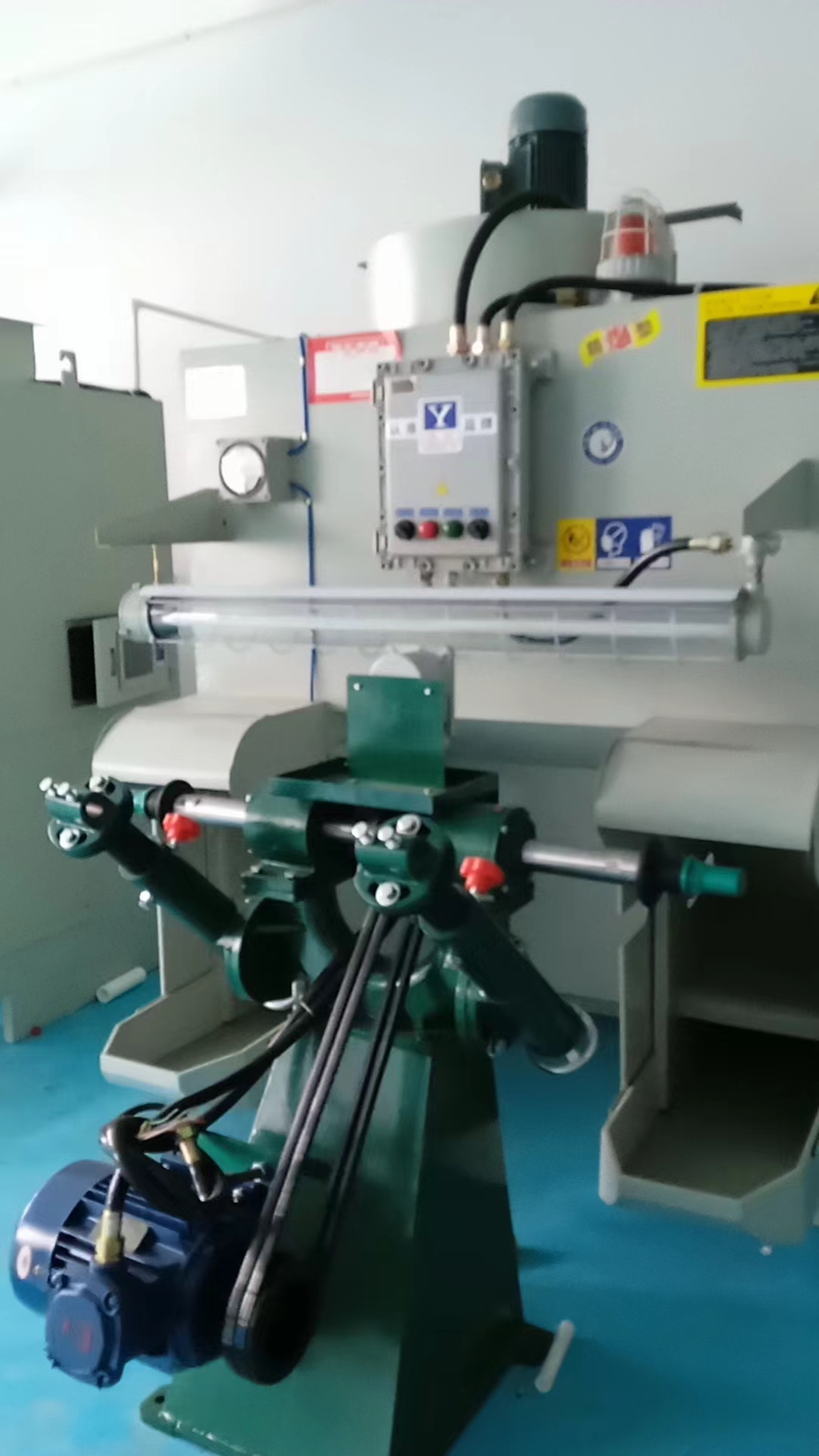
Manufacturing evidence visible in the Yortho facility includes wire-cut EDM for precision forming, polishing rooms for surface finishing, and bracket base marking for product identification. These process steps are relevant to buyers because they affect dimensional consistency and clinical handling. Buyers evaluating a supplier can request photos or factory audit evidence of the specific process steps relevant to their product category.
Evidence from Clinical and Distribution Use
Sourcing teams should look for evidence that products have performed under real clinical and distribution conditions. Yortho reports two relevant experience patterns.
One dental hospital in Indonesia used approximately 3,000 units of orthodontic products over roughly two years. The reported clinical feedback was positive, with stable product performance and compliance with local hospital requirements. The hospital highlighted that self-ligating brackets significantly shortened the overall orthodontic treatment duration.
In a separate pattern, a distributor serving GB, US, IT, FR, DE, EG, ES, CU, AU, CA and other markets ordered approximately 5,000 units over a one-to-three-year relationship. Favorable clinical feedback was reported with consistent product performance and cost-effective pricing.
These examples are not randomized clinical trials. They function as reference points for the buyer: ask for evidence that the specific product model has already been supplied to similar clinical environments, and verify whether the supplier can provide batch-level documentation.
Applying a Six-Point Material Evaluation Workflow
Distributors and clinical procurement teams can standardize supplier review with the following sequence.
- Define the clinical system: bracket prescription, slot size and archwire sequence.
- Verify material compatibility: stainless steel, NiTi, beta-titanium, aluminum oxide or polymer, and any nickel-allergy requirements.
- Check product-specific documentation: registration numbers, certificates and export documents should name the actual product family.
- Confirm configurations: hooks, torque, upper/lower forms, sizes and packaging units.
- Request samples for clinical handling: evaluate base mesh, slot smoothness, cap marking and packaging.
- Review manufacturing evidence: process traceability, inspection records and production capacity for repeat orders.
Frequently Asked Questions
What certifications should a buyer ask for when importing orthodontic materials?
Ask the supplier for product-specific documentation. Yortho holds FDA registration, ISO quality management system certification and CE certification under the new EU MDR framework. The FDA registration number 3030680214 is issued by the U.S. FDA / CDRH under 21 CFR Part 807 and covers a defined scope of dental and orthodontic devices. A separate Certificate for Exportation of Medical Products, number Zhehang Food & Drug Admin Medical Device Export 20250496, is documented for orthodontic pliers. Share your destination country with the supplier so they can confirm which documentation is required for local customs clearance.
What is the minimum order for a first trial and for OEM or ODM projects?
For standard products, the formal order MOQ is US$1,000 in total order value. For a first order, Yortho supports a no-MOQ policy to allow market testing. For OEM and ODM customization, the MOQ is 500 units for fully custom OEM products and 1,000 units for ODM products that adapt existing designs with buyer branding or minor modifications. If you are testing a new market, you can request a smaller initial volume for standard products.
Can samples be requested before placing an order?
Yes. Yortho sends samples for quality checks before formal ordering. Most products are provided free of charge, except for higher-cost items such as pliers and self-ligating brackets. The buyer covers courier shipping. If you have a DHL, FedEx or UPS account, the shipment can be arranged on a freight-collect basis. Otherwise, the supplier will provide a courier quote based on your shipping address and postal code.
What is the standard production lead time?
For standard products with regular warehouse stock, Yortho can pack and dispatch orders within 3 business days after payment confirmation. For OEM or customized products, production time depends on the product type and customization scope. After dispatch, express courier delivery generally takes 3-7 business days; air freight ranges from 7-12 days; rail or overland freight takes 20-30 days for certain regions such as Europe and Central Asia; sea freight typically takes 25-40 days.
How does after-sales service work?
Yortho provides after-sales support on all orders and states that product quality is guaranteed. The company emphasizes long-term partnerships and will work to resolve problems that arise after shipment. If you require a specific certificate, batch inspection file or replacement support, the fastest path is to send your request with your order or sample information directly to the Yortho team at info@yortho.com. For product documentation and a full range overview, the downloadable brochure is also available below.
Starting Your Evaluation With Verified Samples
Orthodontic material evaluation works best when conducted with actual product samples, written specifications and product-specific compliance files. Start by shortlisting two or three product families that match your clinical system, then request samples and certificates from the manufacturer.
Yortho provides OEM/ODM manufacturing, standard orthodontic consumables and product documentation for global buyers.
Website: www.yortho.com
Email: info@yortho.com
WhatsApp: +86 180-5879-3627
Have Questions or Need More Details?
Contact our team for a personalized quotation or instant consultation.
Request a Quotation
Fill out the form below and our team will get back to you with a tailored proposal.
WhatsApp Direct Chat
Prefer to chat in real-time? Message us on WhatsApp for instant assistance & quick answers.
- Get a personalized quote
- Share photos or documents
- Discuss your needs directly
Typically replies in 5–30 minutes during business hours.