
Ceramic Self-Ligating Brackets: Material, Slot, System and Compliance Checks
Ceramic Self-Ligating Brackets: Material, Slot, System and Compliance Checks
Ceramic self-ligating brackets are a growing segment within orthodontic materials because they combine aesthetic appearance with a self-ligating working mechanism. For global buyers and dental professionals evaluating these products, the purchasing decision goes beyond appearance: it requires verification of material composition, slot dimensions, prescription systems, bonding base design, and regulatory documentation.
The global orthodontic consumables market was valued at USD 3.1 billion in 2024 and is projected to reach USD 4.3 billion by 2030. Within that market, the brackets segment led industry revenue in 2024. Ceramic self-ligating brackets, in particular, are gaining popularity for their aesthetic and friction-reduction benefits. This article provides a specification and compliance framework for evaluating ceramic self-ligating brackets, using the Y-C2 Mini Self-ligating Ceramic Bracket from Yortho as a concrete reference point.
Yortho is an orthodontic brand owned by YAM Global Limited and operates its own factory in Deqing, Huzhou, Zhejiang Province, China, under Zhejiang YO Medical Technology Co., Ltd. The company produces orthodontic brackets, buccal tubes, molar bands, arch wires, pliers, auxiliaries, pediatric crowns, and related orthodontic supplies.
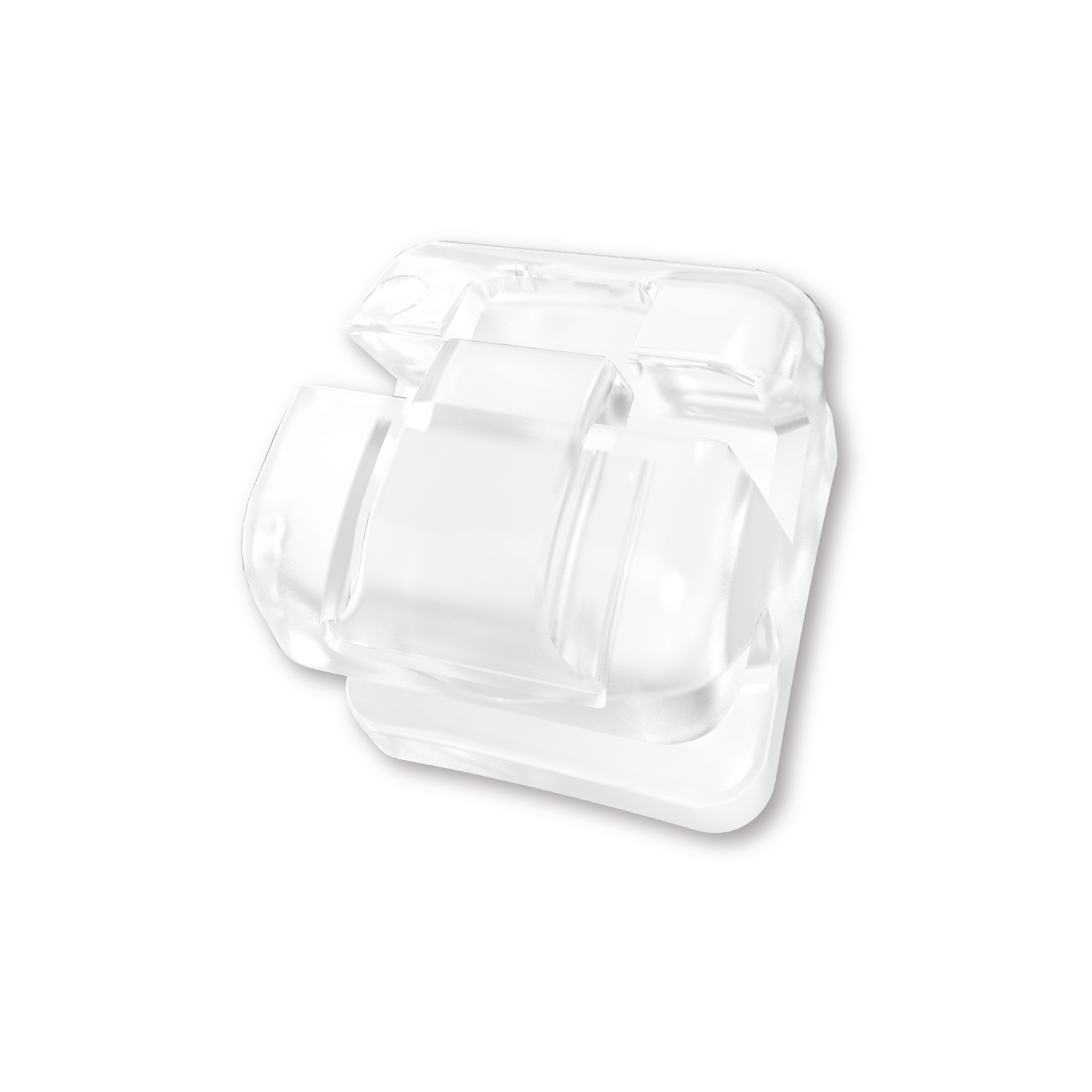
Y-C2 Mini Self-ligating Ceramic Bracket (Source: Yortho product catalog)
Why Specification and Compliance Matter in Orthodontic Procurement
Orthodontic brackets are medical devices. In the United States, the FDA classifies orthodontic brackets as Class II medical devices requiring 510(k) clearance or equivalent registration for market access. In the European Union, CE marking under the Medical Device Regulation (MDR 2017/745) is mandatory for orthodontic brackets. These regulatory requirements mean that a bracket purchased from an unverified source can fail customs inspection, delay clinic inventory, or create legal and clinical risk.
Beyond certification, clinical performance depends on accurate specifications. Slot size must match the arch wire dimensions. Prescription system must be compatible with the treatment philosophy of the clinic. Bonding base design affects debonding rates. Aesthetics and patient comfort influence patient acceptance.
Buyers need a consistent evaluation framework. The following sections define what to check when purchasing ceramic self-ligating brackets.
The Brackets Segment: Market Context for Orthodontic Consumables
The global orthodontic supplies market was estimated at USD 14.8 billion in 2024. China’s orthodontic supplies market was estimated at USD 713.25 million in the same year. North America dominated the overall orthodontic market with approximately 38.4% share in 2025. These figures demonstrate that bracket procurement is not a niche activity but a substantial category within global healthcare trade.
Within the consumables segment, brackets represent the dominant product category in terms of revenue share. Stainless steel remains the most widely used material for orthodontic arch wires and brackets globally, but ceramic brackets are increasingly specified for aesthetic-oriented treatments, particularly among adult patients and professionals treating anterior teeth.
Companies manufacturing these products in China’s major dental instrument export provinces, including Zhejiang, are part of a supply chain that exported approximately USD 12.7 billion in Medical Instruments (HS 9018) in 2025. Buyers evaluating ceramic self-ligating brackets should therefore assess not only product features but also the manufacturer’s export history, certification documents, and quality management system.
Y-C2 Mini Self-Ligating Ceramic Bracket: Detailed Specification
The Y-C2 Mini Self-ligating Ceramic Bracket is manufactured using polycrystalline or monocrystalline aluminum oxide (Al₂O₃). This material forms the basis of its translucent appearance and mechanical strength.
Material and Manufacturing
Monoblock injection molding is used to produce the bracket body. This technique delivers an ultra-smooth surface, superior mechanical strength, and consistent aesthetic outcomes. The aluminum oxide structure provides a clear or tooth-colored appearance while maintaining the mechanical integrity required for daily orthodontic forces.
Available Configurations
- Slot sizes: 18 and 22 (0.018" and 0.022")
- Hook option: with hook / without hook
- Prescription systems: Roth, MBT, Edge-wise
- Material: Al₂O₃ (polycrystalline or monocrystalline aluminum oxide)
- OEM customization: supported
Bonding Base Design
The optimized base design is engineered to provide stable mechanical bonding strength and to effectively prevent debonding. For orthodontists, this translates into fewer emergency visits and more predictable treatment progress.
Step-by-Step Framework for Evaluating Ceramic Self-Ligating Brackets
Step 1: Verify Material Composition
Confirm whether the bracket is made from polycrystalline or monocrystalline aluminum oxide. Polycrystalline alumina offers good strength and aesthetics at a balanced cost. Monocrystalline alumina provides higher translucency. Some products are made from metal-reinforced ceramic or metal slot ceramic hybrids; these are different products and should be evaluated separately. The Y-C2 product line uses Al₂O₃ ceramic material, which is free of the nickel and chromium commonly found in stainless steel brackets.
Step 2: Confirm Slot Size and Compatibility with Arch Wires
Slot sizes must be selected to match the clinical arch wire sequence. The Y-C2 is available in 0.018" and 0.022" slot sizes. Buyers should confirm which slot size is commonly used in their target market. For example, 0.022" slots are common in many Asian and European markets, while 0.018" slots are often preferred in some North American practices.
Step 3: Check Prescription Systems
The bracket must match the treatment philosophy of the orthodontist. The Y-C2 supports Roth, MBT, and Edge-wise systems. A buyer stocking ceramic self-ligating brackets should understand the difference between Roth and MBT prescriptions and stock the configuration most commonly used by their clinical customers.
Step 4: Evaluate the Ligating Mechanism
Self-ligating brackets use a mechanical clip or slide to hold the archwire instead of elastic ligatures or steel ties. This reduces friction between the archwire and the bracket slot. Low-friction slot design is a key attribute of the Y-M2 metal self-ligating bracket and is also relevant to the Y-C2 ceramic self-ligating system because it supports efficient tooth movement and may shorten treatment duration.
Step 5: Review the Bonding Base
A ceramic bracket must bond reliably to the tooth surface without fracturing during debonding. The Y-C2 features an optimized base design that provides stable mechanical bonding strength and prevents unexpected debonding. Buyers should request bonding failure data or clinical references from the manufacturer.
Step 6: Verify Regulatory Documentation
Review the manufacturer’s certifications before committing to a purchase. For the U.S. market, the Y-C2 ceramic self-ligating bracket is covered by FDA registration under number 3030680214, issued by the U.S. FDA/CDRH. The company’s broader orthodontic product portfolio—including orthodontic braces, bands, arch wires, auxiliaries, power chains, crimpable hooks, elastic ligatures, face masks, mirrors, expansions, ceramic self-ligating brackets, kids crowns, clear brackets, buccal tubes, mini brackets, and pliers—is registered under the same FDA number, complying with 21 CFR Part 807 for the U.S. market.
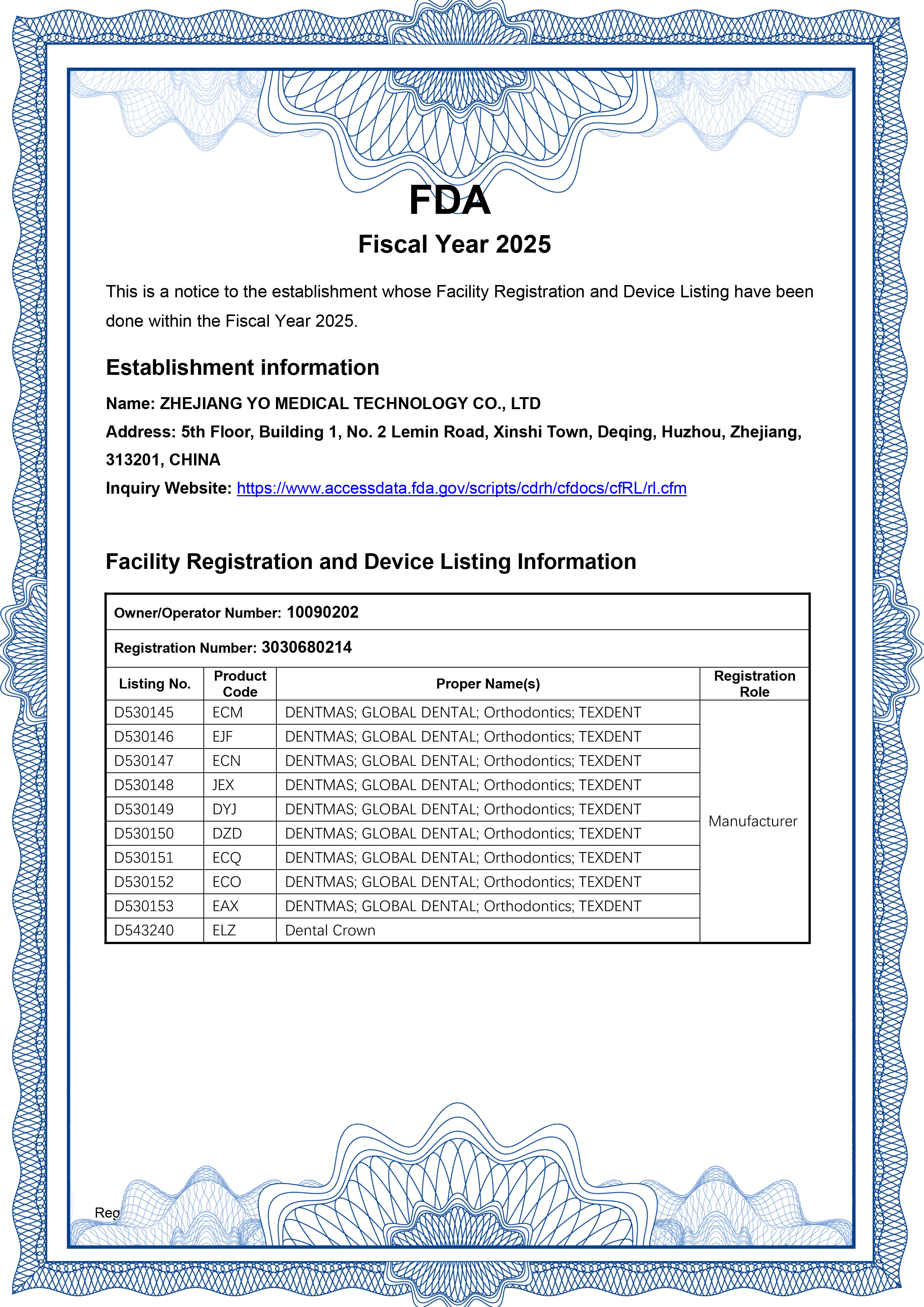
Yortho FDA registration certificate (Source: Yortho certification documents)
Step 7: Assess Manufacturer Capability
For long-term sourcing, confirm the manufacturer can support consistent quality, stable lead times, and after-sales service. Zhejiang YO Medical Technology Co., Ltd operates a 5,000 m² factory with 100 employees and an annual output of 30,000,000 units. The R&D team includes 20 engineers. Export ratio is approximately 80%, with main markets across EU, USA, Middle East, Australia, and Africa.
For OEM/ODM customization, Yortho offers package, logo, and tag customization. ODM MOQ is typically 1,000 units; OEM MOQ is typically 500 units. Standard product orders can be packed and dispatched within 3 business days after payment confirmation because standard products are stocked in the warehouse.
Complementary Orthodontic Materials in a Full Fixed Appliance System
Ceramic self-ligating brackets are one part of a complete fixed orthodontic system. Buyers evaluating ceramic brackets should also consider the following complementary categories:
- Orthodontic Buccal Tubes: The Y-T1 Buccal Tube is a metal tube with a slim body, an 80-mesh bonding base, and options for Roth and MBT systems in 0.018" and 0.022" slot sizes. It is used for posterior anchorage and is designed with a smooth inner slot to reduce archwire friction.
- Orthodontic Bands: The Y-H6002 1st Molar Plain rough Band is made from medical-grade stainless steel. It features permanent laser marking for size identification and a patented textured inner surface that boosts bonding strength by 30% and prevents debonding. It is compatible with Roth and MBT systems in 0.018" and 0.022" slot specifications.
- Orthodontic Arch Wires: The Y-SS stainless steel wire and Y-SN super-elastic NiTi wire are available in multiple arch forms including Square, Natural, Damon, Oval, Europa-I, and Broad. The Y-TMA round arch wire is nickel-free and suitable for patients with nickel allergies.
- Auxiliaries: Crimpable hooks, lingual buttons, power chains, and elastic ligatures complete the clinical workflow.
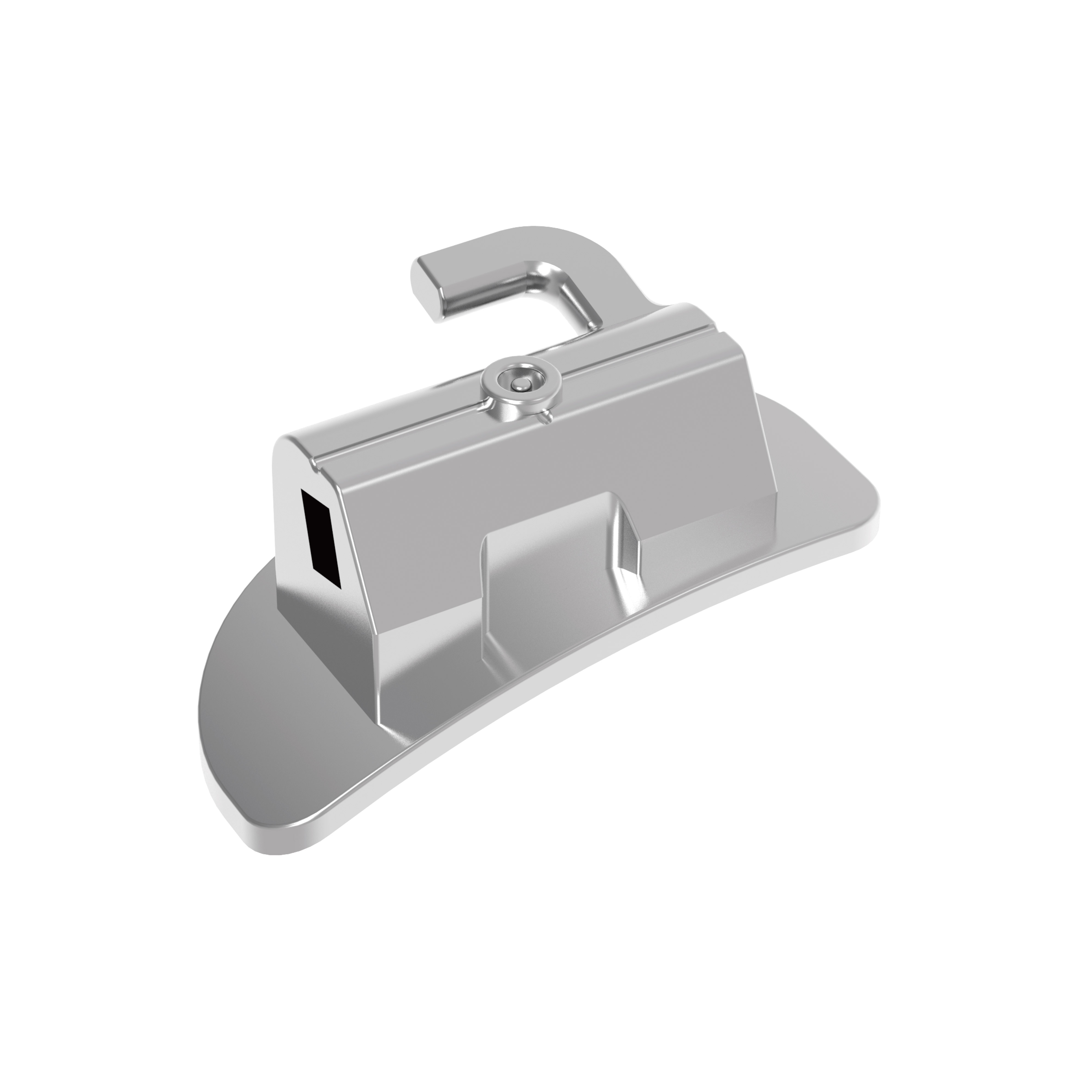
Y-T1 Buccal Tube (Source: Yortho product catalog)
Use Cases: How Buyers and Clinics Apply Ceramic Self-Ligating Brackets
Use Case 1: Dental Hospital Adoption for Aesthetic Orthodontics
A dental hospital in Indonesia ordered approximately 3,000 units of orthodontic products over a two-year period. The hospital reported good clinical feedback, stable product performance, and compliance with local hospital clinical requirements. The hospital highlighted that self-ligating brackets significantly shortened the overall orthodontic treatment duration. This case demonstrates the value of self-ligating technology in a high-volume clinical environment.
Use Case 2: Multi-Country Distribution Partnership
Distributors across countries including GB, US, IT, FR, DE, EG, ES, AU, CA, CO, DK, DJ, FI, HU, ID, QA, and SA have maintained purchasing relationships over 1 to 3 years, with volumes up to 5,000 units. The reported result was favorable clinical feedback, consistent product performance, and compliance with clinical requirements of local hospitals. The key highlight from these distributors was superior quality at cost-effective pricing.
Ceramic Self-Ligating vs. Metal Self-Ligating vs. Clear Ceramic Brackets
Buyers need to understand how ceramic self-ligating brackets compare with other bracket options before selecting their inventory mix.
| Comparison Parameter | Ceramic Self-Ligating Bracket (Y-C2) | Metal Self-Ligating Bracket (Y-M2) | Clear Ceramic Bracket (Y-C1 Type) |
|---|---|---|---|
| Material | Al₂O₃ (polycrystalline or monocrystalline aluminum oxide) | 17-4 and 304 stainless steel | Al₂O₃ |
| Ligating Mechanism | Self-ligating | Self-ligating | Conventional (elastic ligatures) |
| Slot Sizes | 18, 22 | 18, 22 | 18, 22 |
| Prescription Systems | Roth, MBT, Edge-wise | Roth, MBT, Edge-wise | Roth, MBT |
| Hook Options | With / without | With / without | With / without |
| Aesthetic Appearance | High (translucent ceramic) | Low (metal) | High (clear transparent body) |
| Surface/Profile | Ultra-smooth surface; monoblock molding | Polished smooth glossy surface; tooth number engraved on base | Low-profile mini structure; rounded contour |
| Key Clinical Advantage | Aesthetic + low friction + stable mechanical bonding | Efficient tooth movement; shorter treatment cycle | Reduced irritation to oral mucosa; comfortable wear |
| Packaging | 20 pieces per set | 20 pieces per set | 20 pieces per set |
Market verification data confirms that ceramic self-ligating brackets are growing in popularity due to their aesthetic and friction-reduction benefits. Orthodontic clinics and standalone practices represent over 50% of the end-user distribution channel for these consumables.
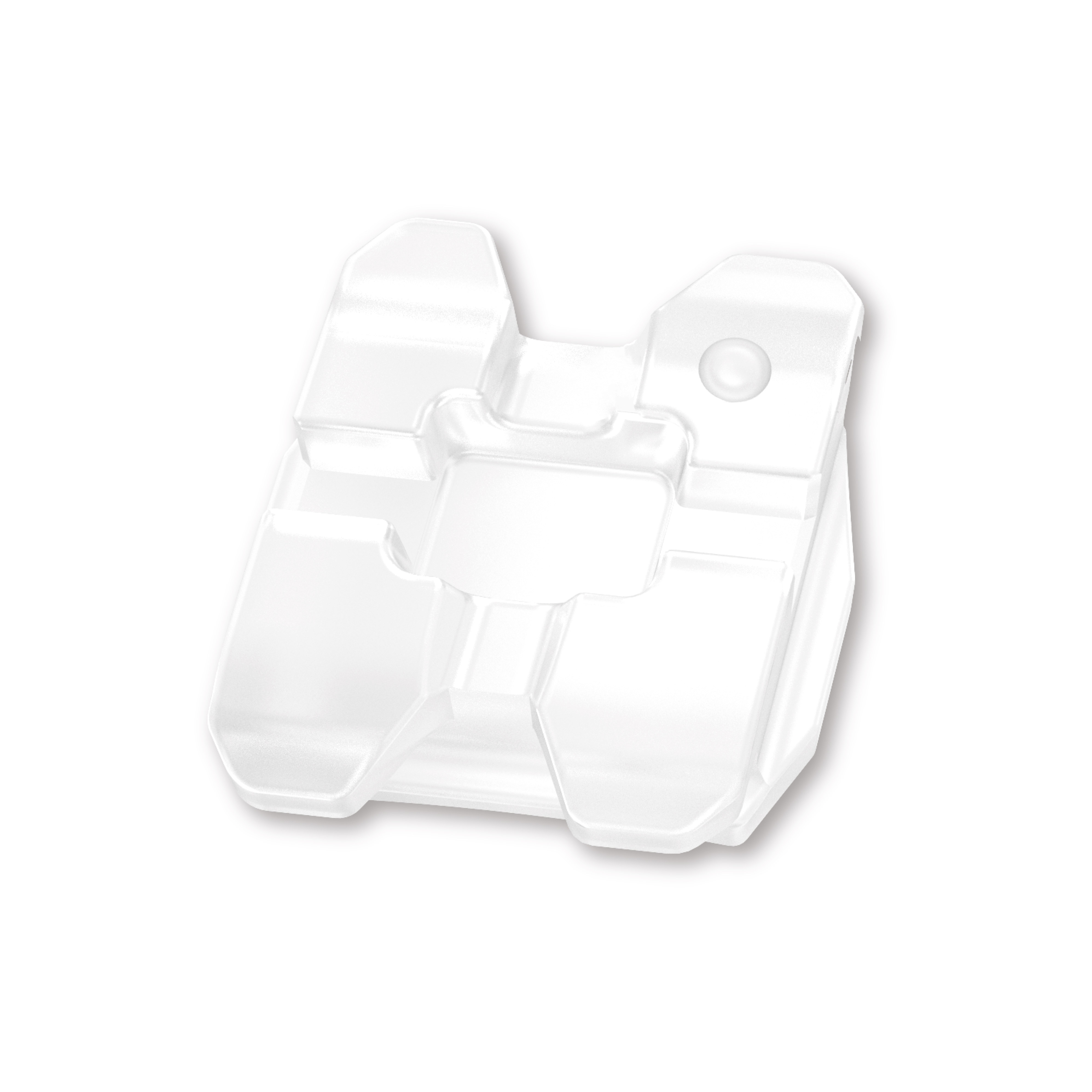
Conventional clear ceramic bracket (Y-C1 Mini Ceramic Bracket) (Source: Yortho product catalog)
FAQ
What kind of certificates do you have?
Yortho holds the necessary certifications to ensure products meet international standards and can clear customs smoothly. Main certifications include ISO quality management system certification, CE certification under the new EU MDR regulation, and FDA registration. The company has successfully exported to regions including the US and Europe. Full PDF copies of test reports and certificates can be provided; buyers should specify their importing country so that the correct documentation for local customs requirements is shared.
Will you provide customize service? What is the MOQ for OEM/ODM products?
Yes, full OEM/ODM customization is available. Typically, the MOQ is 1,000 units for ODM and 500 units for OEM (fully custom products). ODM means adapting existing proven designs with client branding, logo, or minor feature changes. OEM means fully customized production based on exact specifications, materials, and unique design, with intellectual property owned by the client. Buyers are asked to specify the product category, their design or rebranding needs, and target order volume for a tailored quotation.
What payment methods are accepted? What are your payment terms?
Yortho accepts Bank Transfer (T/T), and for small sample orders, PayPal or Ali-Pay (in RMB). Standard payment terms are 100% T/T in advance. For orders above USD 10,000, the payment structure is 30% deposit upfront to start production and 70% balance payment before shipment.
Can I request samples before placing an order?
Yes, samples are available for quality checking. Most products are delivered free of charge, except for some high-cost products such as pliers and self-ligating brackets. The buyer covers the courier shipping cost. If the buyer has a DHL, FedEx, or UPS account, shipment can be made collect. Shipping address and postal code are required for a freight quotation.
What is your standard production lead time?
For standard products, regular inventory is maintained in the warehouse. Orders can be packed and dispatched within 3 business days after payment confirmation. This fast lead time allows buyers to replenish stock quickly without extended waiting periods.
Conclusion
Ceramic self-ligating brackets represent a meaningful investment for distributors, dental clinics, and orthodontic practices. Evaluation should be based on five core criteria: material composition, slot size and compatibility, prescription system, bonding base reliability, and regulatory compliance.
The Y-C2 Mini Self-ligating Ceramic Bracket from Yortho offers a clearly documented specification: Al₂O₃ ceramic material, 18 and 22 slot sizes, Roth/MBT/Edge-wise compatibility, with or without hooks, and FDA registration for the U.S. market. The same manufacturer also supplies the complementary buccal tubes, bands, arch wires, and auxiliaries needed to build a complete fixed appliance inventory.
For buyers who need additional information on certification documents, sample requests, or customization requirements, Yortho provides direct manufacturer support and responsive after-sales service.
Request samples, quotation, or catalog.
Contact Yortho at info@yortho.com or WhatsApp +86 180-5879-3627.
Download the company brochure: Yortho Product Brochure (PDF)
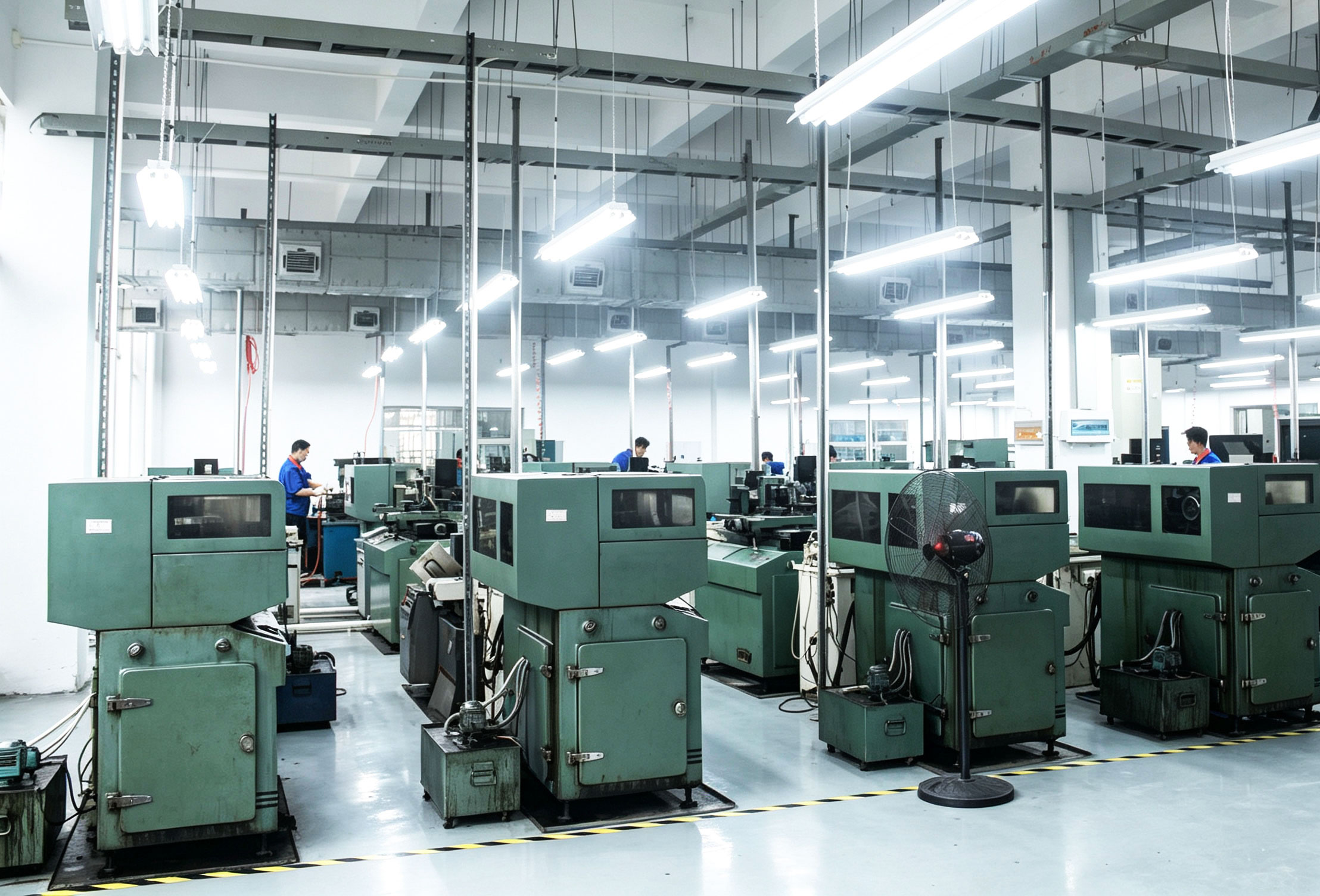
Yortho factory shared operating area (Source: Yortho)
Have Questions or Need More Details?
Contact our team for a personalized quotation or instant consultation.
Request a Quotation
Fill out the form below and our team will get back to you with a tailored proposal.
WhatsApp Direct Chat
Prefer to chat in real-time? Message us on WhatsApp for instant assistance & quick answers.
- Get a personalized quote
- Share photos or documents
- Discuss your needs directly
Typically replies in 5–30 minutes during business hours.