
Orthodontic Materials Compliance Guide: Lingual Buttons, Hooks & Power Chains
Orthodontic Materials Compliance Guide: Lingual Buttons, Hooks & Power Chains
Orthodontic materials is a purchasing category. It is not a compliance category. A single auxiliary order can contain bonded stainless steel lingual buttons, ceramic lingual buttons, crimpable hooks, elastomeric power chains, elastic ligatures and stainless steel expansion screws. Those items sit in four different material families, and they rarely travel through the same documentation route.
The core answer: compliance for orthodontic auxiliaries is verified product category by product category, not brand by brand. Three questions need documented answers before an auxiliary is approved for purchase: which quality-management standard governs the manufacturing site, which conformity route applies to that specific device in the destination market, and which product-level evidence (model number, material specification, test documentation) exists for the exact item on the purchase order.
A supplier's quality-system certificate does not, on its own, confirm that a power chain, a lingual button or an expansion screw is covered by the route your market requires. The rest of this guide is about closing that gap.
Yortho, a UK brand belonging to YAM Global Limited, manufactures through its own operation in Asia and exports to more than 70 countries. Its published certification position is FDA registration, ISO quality management system certification, and CE certification under the new EU MDR regulation. That is a starting point for a buyer conversation, not a complete auxiliary file.
Why One Orthodontic Materials Certificate Never Covers an Auxiliary Order
Compliance files are built around devices, not around catalogues. Buyers who transfer a bracket approval pack onto an auxiliary order usually discover the mismatch late, at the customs desk or during a clinic traceability review, when the document set names one product family and the shipment contains four.
The mismatch starts with material and function:
- Bonded metal auxiliaries such as lingual buttons and eyelets depend on a bonding interface and a base geometry, so the evidence that matters is the base specification and process control at the bonding surface.
- Bonded ceramic auxiliaries, such as ceramic lingual buttons, add a different material declaration and a different handling profile.
- Crimpable metal components such as hooks and tube stops depend on dimensional accuracy and alloy consistency, because they are mechanically deformed onto an archwire.
- Elastomeric auxiliaries such as power chains and elastic ligatures are polymer products; their compliance questions concern polymer grade, latex status and force-retention behaviour rather than alloy composition.
- Mechanical appliances such as expansion screws add tolerance and dimension-based verification.
- Reusable instruments add sterilization compatibility and documented hardness grades.
Regional rules compound the problem, because a regulatory route is assigned device by device. Two well-documented examples show how: the EU Medical Device Regulation (MDR 2017/745) is mandatory for orthodontic brackets to receive CE marking, and the US FDA classifies orthodontic brackets as Class II devices requiring 510(k) clearance. Both statements describe brackets. They illustrate the logic of device-level classification; they are not a template that can be copied onto a power chain, a crimpable hook or an expansion screw.
Material risk works the same way. Nickel and chromium are the primary allergens of concern in metal orthodontic brackets, which is why metal auxiliaries should be supported by an alloy declaration for the specific model rather than an assumption that the bracket declaration covers the whole metal set. For polymer auxiliaries, latex status is the equivalent question. Yortho Power Chains, for example, are specified in premium non-latex medical-grade polyurethane, a detail that matters to clinics treating latex-sensitive patients.
The practical consequences of an incomplete auxiliary file are consistent across markets: customs queries when the declared product does not match the supporting documents, clinic-level traceability gaps when a model number cannot be tied to a specification sheet, and reorder risk when the item that arrives is not the item that was approved.
The Regulatory and Market Context Behind Auxiliary Compliance
Four regulatory reference points now shape how orthodontic manufacturers and their buyers build documentation.
- ISO 13485:2016 is the quality-management standard that medical device manufacturers are certified against for international market access.
- US FDA QMSR alignment. ISO 13485:2016 is explicitly recognized by the US FDA as the primary basis for the new Quality Management System Regulation, which links the ISO framework and US quality expectations more closely than before.
- EU MDR 2017/745 governs CE marking in the European Union; it is mandatory for orthodontic brackets.
- MDSAP. The Medical Device Single Audit Program is increasingly used by orthodontic manufacturers because a single audit can satisfy the quality-system requirements of five jurisdictions: Australia, Brazil, Canada, Japan and the United States.
Market context explains why documentation pressure is increasing rather than easing. The global orthodontic supplies market was valued at USD 14.8 billion in 2024 (Global Market Insights), while the narrower orthodontic consumables segment was valued at USD 3.1 billion in 2024 and projected to reach USD 4.3 billion by 2030 (Grand View Research). Buyers should note that published figures differ by scope: one report counts supplies, another counts consumables only, so a number is only meaningful when its definition is quoted with it. Regionally, Asia-Pacific is identified as the fastest-growing market for orthodontic supplies, while North America held an estimated 38.4% share in 2025 (Straits Research).
Where the demand sits also drives paperwork volume. Clinics and standalone practices represent more than 50% of the end-user distribution channel, which means orders typically arrive in smaller, more frequent shipments with their own documentation expectations. On the supply side, China exported approximately USD 12.7 billion in medical instruments under HS 9018 in 2025 (OEC), with dental instrument exports clustered in Guangdong, Jiangsu and Zhejiang. That last province is where Yortho's manufacturing operation is registered, as Zhejiang YO Medical Technology Co., Ltd in Deqing, Huzhou, Zhejiang Province, China.
A Four-Layer Compliance Framework for Orthodontic Auxiliaries
The framework below converts a mixed auxiliary order into a set of verifiable document requests. It works from the product outward, which is the direction compliance reviewers read.
Layer 1 — Classify the auxiliary by material and function
Every document request follows this first split. Yortho's auxiliary range illustrates the families clearly:
- Bonded stainless steel lingual buttons and eyelets — Y-F303 bondable lingual buttons on a round 80# mesh base, Y-F307 bondable lingual eyelet on a round base, Y-F308 bondable lingual eyelet traction hook, and Y-F322 lingual buttons with a round base with hole.
- Bonded ceramic lingual buttons — Y-F305C ceramic bondable lingual buttons on a round base.
- Crimpable components — Y-F105L and Y-F105R spiral crimpable hooks at 0.022 inch and 8.7 mm with left and right types, Y-F102 crimpable hooks at 0.022 inch and 2.4 mm, Y-F201 crimpable hooks at 0.022 inch and 2.4 mm, and Y-F204 mini round tube stops at 0.019 inch.
- Elastomeric auxiliaries — Y-S80101 power chains in open long, closed continuous and open short types (1 roll per pack) and Y-S80201 elastic ligature rings in normal and ring clear types (packed 40 pcs per bag or 10 pcs per bag), both specified in high-elasticity polymers.
- Mechanical appliances — K, G and I series expansion screws in stainless steel, with screw and pin lengths of 12 mm, 16 mm, 18 mm and 20 mm and expansion sizes of 7 mm, 9 mm, 11 mm, 13 mm and 15 mm.
- Reusable instruments — pliers and hand instruments with declared hardness grades, for example HRC 58-63 on listed cutter models, a maximum sterilization temperature of 180 degrees Celsius, and tweezers autoclavable up to 134 degrees Celsius.
Layer 2 — Establish the quality-system layer
Before any product-specific question, buyers should confirm the manufacturing site's quality system. ISO 13485:2016 is the reference standard for international market access, and it is now recognized by the US FDA as the primary basis of its Quality Management System Regulation. Where several markets are involved, an MDSAP-based audit covers Australia, Brazil, Canada, Japan and the United States in a single programme.
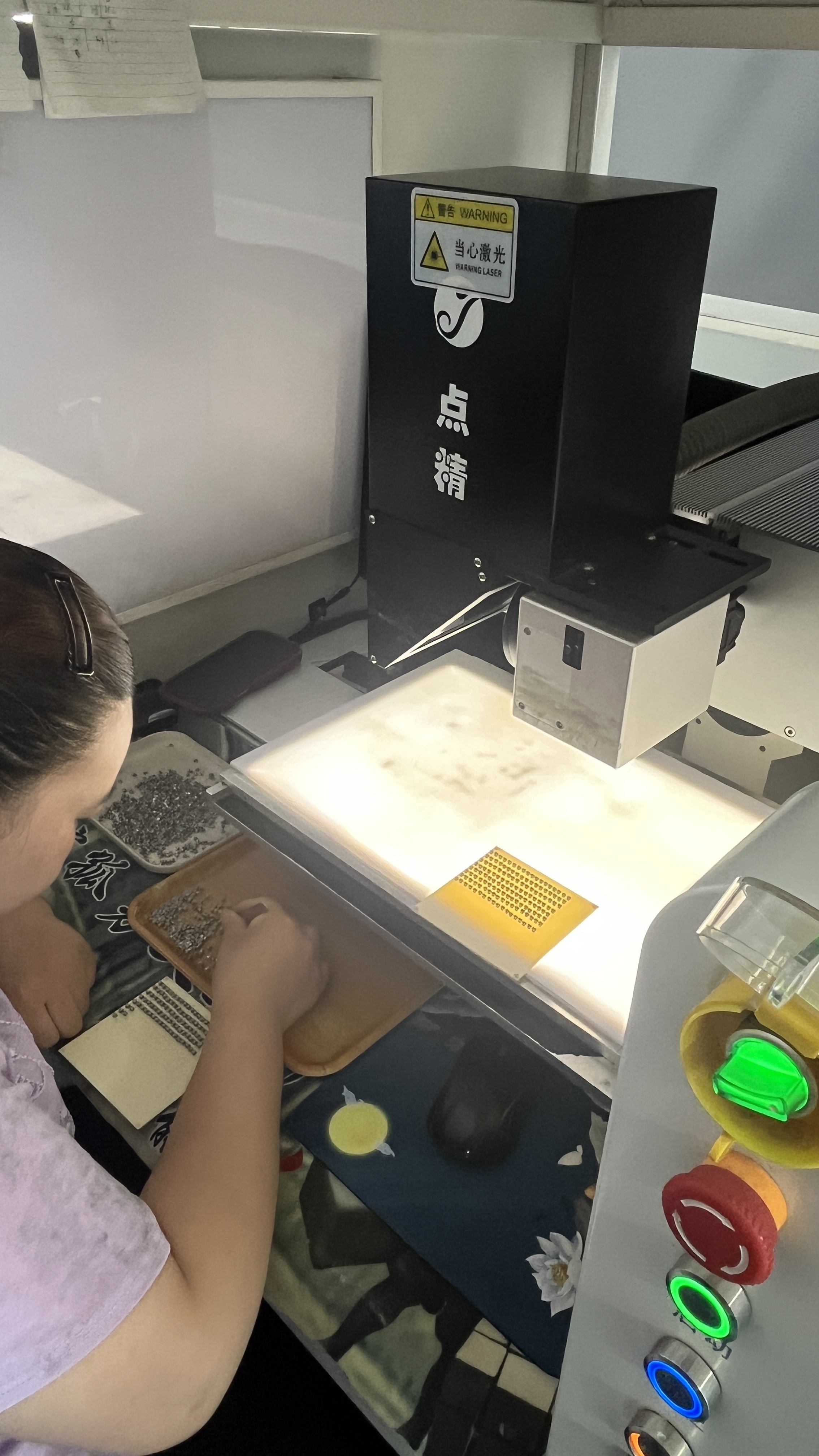
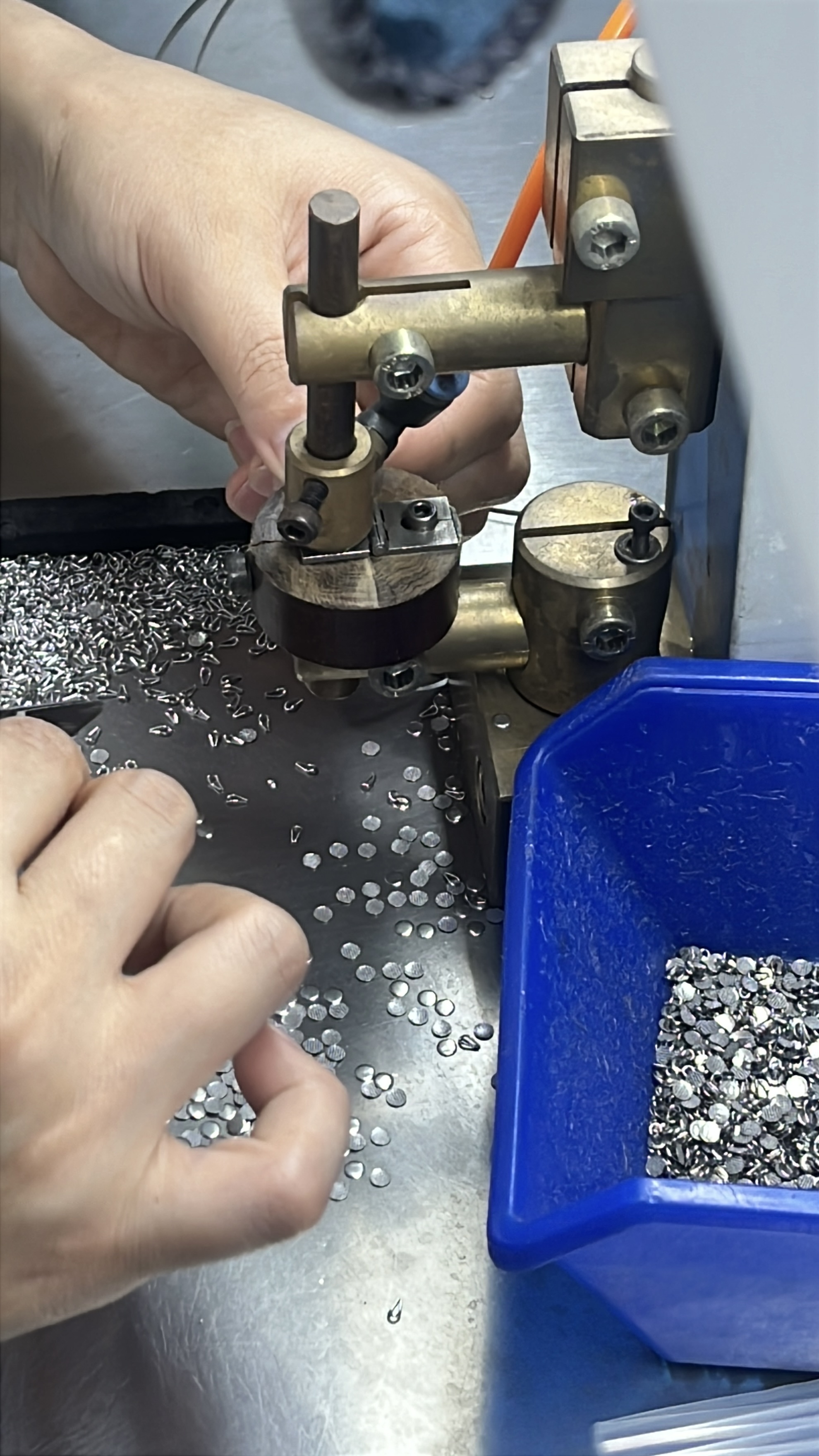
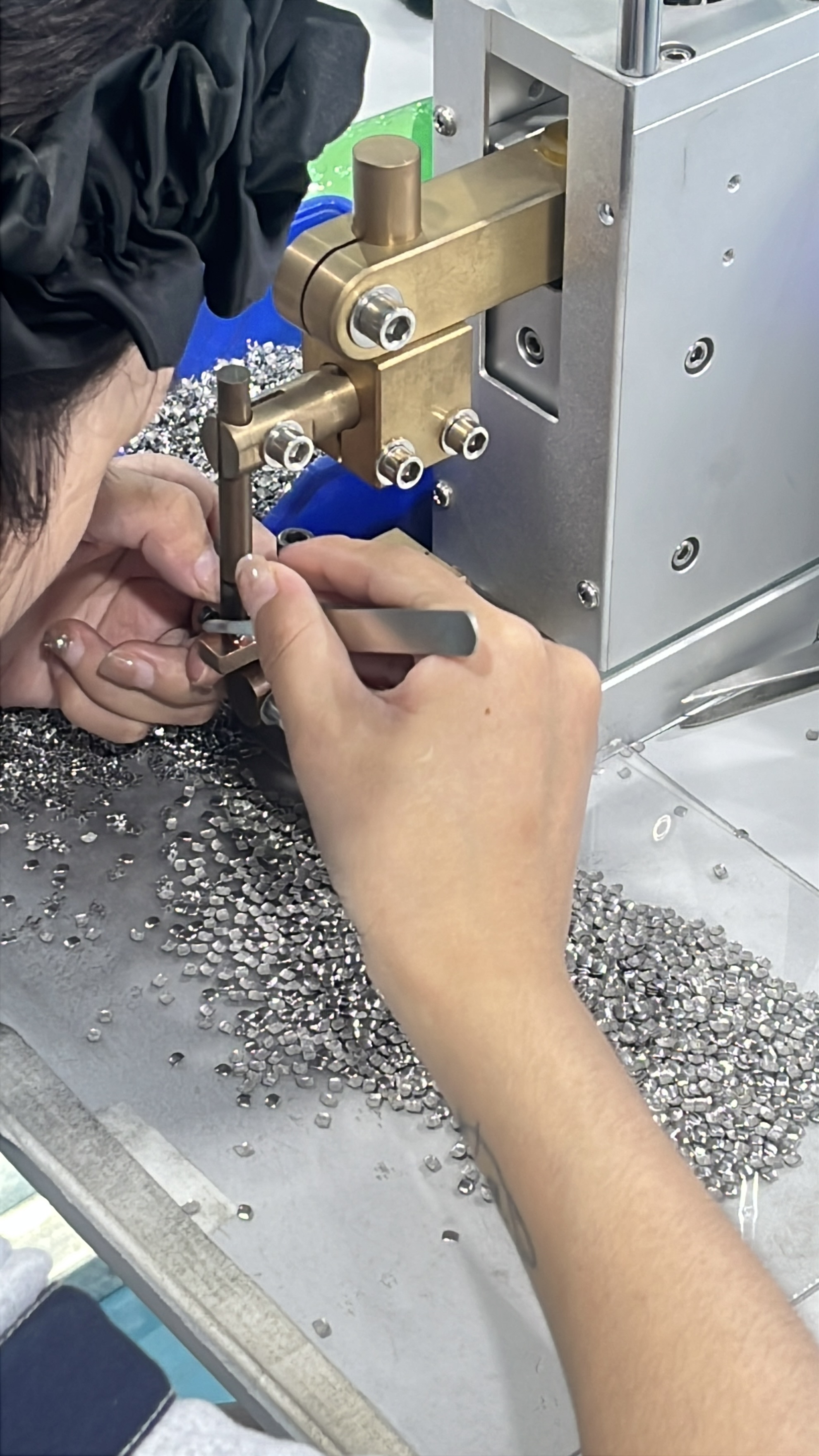
Yortho's position at this layer is documented as ISO quality management system certification, CE certification under the new EU MDR regulation, and FDA registration. Production management is described as running across the whole workflow, from raw material incoming inspection through precision processing to finished-product testing. That sequence matters to buyers because it is the chain a supplier must be able to describe when a batch question is raised.

Layer 3 — Map the destination market to the product
The destination decides which conformity document is relevant, and different destinations accept different evidence:
- European Union. CE marking under MDR 2017/745 is the route; brackets are the documented example of a category where it is mandatory. Verify that the certificate and technical documentation cover the auxiliary category you are buying, not only the bracket line.
- United States. The FDA classifies orthodontic brackets as Class II devices requiring 510(k) clearance. For each auxiliary, confirm the classification assigned to that device and the corresponding pathway before shipment, rather than assuming the bracket pathway extends across the order.
- MDSAP jurisdictions (Australia, Brazil, Canada, Japan, United States). A quality system maintained under MDSAP can satisfy quality-system expectations across those five markets with one audit programme.
- Other regions. Registration and documentation expectations vary by authority and are frequently updated. Ask the local importer or authority what the shipment will require, and ask the supplier for the specific set rather than a generic certificate bundle.
Yortho's products are exported to more than 70 countries, including the United States, the United Kingdom, France, Germany, Italy, Greece, Russia, Saudi Arabia and Egypt, and the company states that it prepares documentation according to the importing country. Buyers in any market should still confirm the requirement for their own destination.
Layer 4 — Collect product-level evidence
This is the layer most often missing from an auxiliary file. It contains four items:
- Model and specification confirmation. The document should name the exact model: Y-F303 with a round 80# mesh base, Y-F105L and Y-F105R at 0.022 inch and 8.7 mm, Y-S80101 in the specific chain type, K, G or I series expansion screws at the ordered screw and pin length and expansion size.
- Material and allergen declarations. For metal auxiliaries, the alloy used in that model; for polymer auxiliaries, the polymer grade and latex status.
- Process and test evidence. Reports covering incoming raw material inspection, processing and finished-product testing for the ordered category.
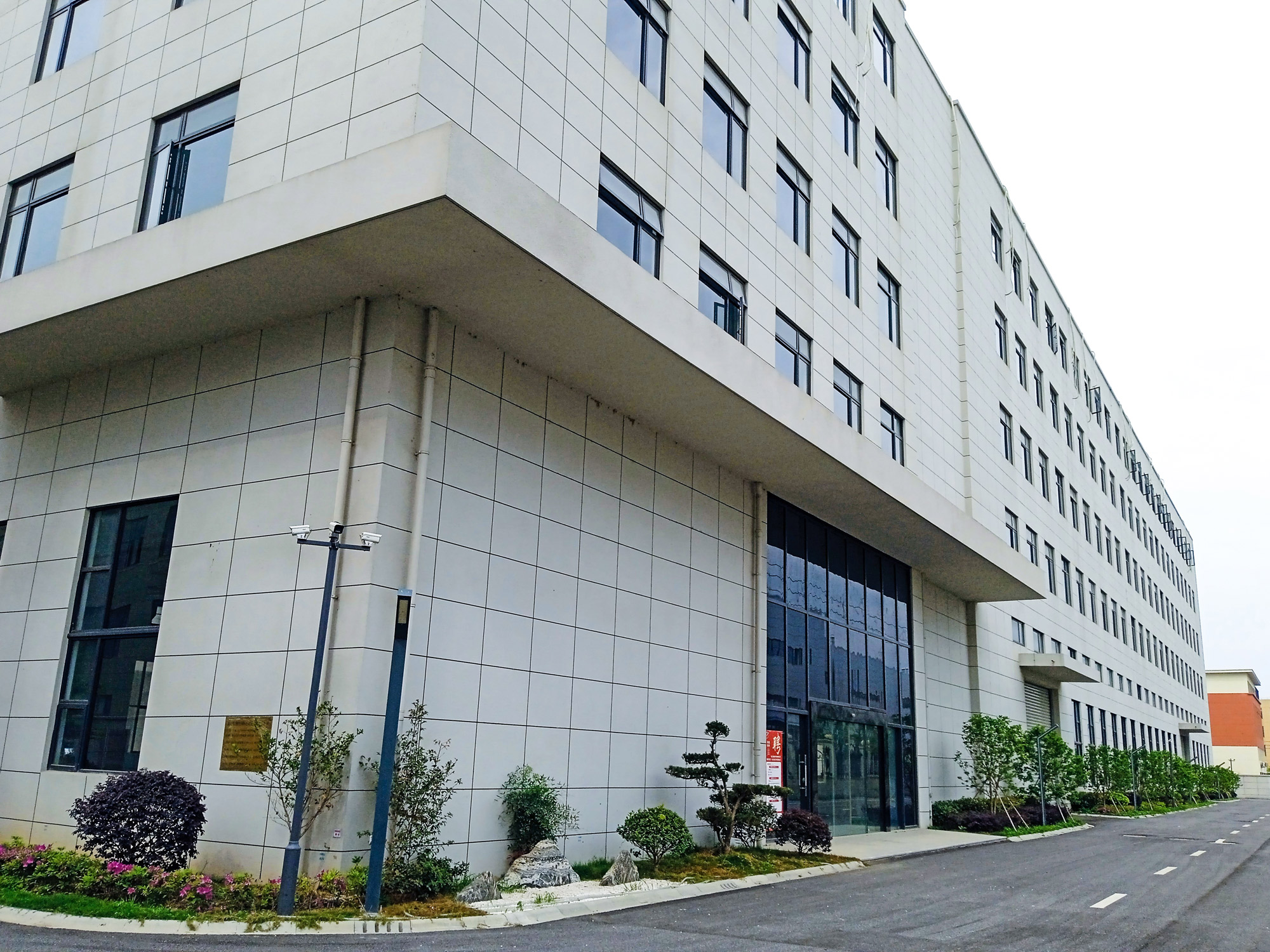
- Supplier capacity context. Yortho reports a 5,000 square metre facility, 100 employees, 20 engineers and an annual output of 30,000,000 units, with an export ratio of 80%. Capacity figures do not replace product evidence, but they help a buyer judge whether documentation discipline can be sustained at order volume.
Performance claims belong in this layer too, and they should be requested with their supporting test reports rather than accepted as headline numbers. Yortho publishes comparative figures for its power chains, including a 60% to 73% reduction in permanent deformation rate, 75% to 85% higher reliability in clinical simulated breakage, and 30% to 50% less chair-side replacement frequency than alternative power chains. For the I series expansion screw, the published differentiation against a maxillary skeletal expander is micro-tolerance control with structural clearance of less than 3 microns and optimized thread surface roughness at Ra 0.1. A buyer who files those numbers should also file the test report that produced them.
How to Read an Auxiliary Certification File: Seven Steps
Reading a certificate file is a sequence, and the order matters. Reviewers who start with the certificate logo usually finish without knowing what the certificate covers.
- Split the order into compliance families. Group the purchase order into bonded metal items, bonded ceramic items, crimpable metal components, elastomeric auxiliaries, mechanical appliances and reusable instruments. Each family gets its own document subfolder.
- Read the quality-system layer first. Confirm certification against ISO 13485:2016 or an equivalent quality system, and note whether the covering programme addresses the markets you sell into.
- Check the certificate scope against model numbers. A quality-system certificate describes a system; the product-level evidence must name the model, such as Y-F307, Y-S80101 or Y-F204. If the auxiliary category is absent from the scope description, ask for confirmation in writing.
- Identify the destination route per family. EU: CE marking under MDR 2017/745. US: the FDA pathway applicable to that device (brackets, for reference, are Class II and require 510(k) clearance). MDSAP-covered markets: one audit programme across five jurisdictions.
- Request material and allergen declarations for the specific item. Nickel and chromium are the primary allergens of concern in metal orthodontic brackets; metal auxiliaries should carry their own alloy statement. Polymer auxiliaries should carry a latex status statement.
- Confirm mechanical and sterilization specifications for reusable items. Documented hardness grades and maximum sterilization temperatures prevent an instrument from being approved for a sterilization cycle it was not built for.
- File by category and re-verify on reorders. Store the evidence per auxiliary family and re-check the model and specification sheet when the order repeats, so that specification drift is caught before the goods arrive.
Compliance Scenarios: How Different Buyers Apply the Framework
An EU distributor extending a bracket programme with auxiliaries. The bracket line already has CE marking under MDR 2017/745. The distributor adds lingual buttons, hooks and power chains to the same catalogue and discovers that the existing file does not describe those families. The corrective action is scope confirmation for the auxiliary categories, plus material declarations for the metal items and a latex status statement for the polymer items, all named at model level before the first shipment.
A US clinic group standardizing hooks and instruments. The group reads the FDA position on brackets (Class II, 510(k) clearance) and then asks a different question for each remaining item: what classification applies to this hook, this tube stop and this plier, and what documentation accompanies each. Instrument specifications such as HRC 58-63 hardness and a 180 degrees Celsius maximum sterilization temperature are matched against the clinic's own autoclave protocol before approval.
A Middle East or Africa importer building a first auxiliary catalogue. Registration expectations differ between authorities and change over time, so the importer requests the quality-system certificate, the CE and FDA documentation as reference evidence, and product-level specification sheets for every model in the basket, then verifies the final list with the local authority. Capacity context such as a 30,000,000-unit annual output and an 80% export ratio supports the assessment of supply continuity.
A procurement team validating claims before a framework agreement. Rather than comparing catalogue headlines, the team asks each shortlisted supplier for the test report behind each performance claim, then compares like for like. This is where published figures for power chain deformation and expansion screw tolerance become useful, provided they arrive with documentation attached.
Orthodontic Auxiliary Compliance Comparison Table
| Auxiliary family | Representative Yortho items | Material | Primary compliance evidence to request | Buyer verification point |
|---|---|---|---|---|
| Bondable lingual buttons and eyelets | Y-F303, Y-F305C, Y-F307, Y-F308, Y-F322 | Stainless steel; ceramic (Y-F305C) | Quality-system certificate, model-level specification sheet, material declaration | Base type and bonding surface, for example the round 80# mesh base on Y-F303 |
| Crimpable hooks and tube stops | Y-F105L, Y-F105R, Y-F102, Y-F201, Y-F204 | Stainless steel | Quality-system certificate, dimensional specification, alloy statement | Size fit and left/right type, such as 0.022 inch / 8.7 mm on Y-F105L and Y-F105R |
| Power chains and elastic ligatures | Y-S80101, Y-S80201 | High-elasticity polymers | Quality-system certificate, polymer grade and latex status statement | Chain type and pack format, such as open long, closed continuous or open short, 1 roll per pack |
| Expansion screws | K series, G series, I series | Stainless steel | Quality-system certificate, dimensional specification, finished-product test report | Screw and pin length (12/16/18/20 mm) against expansion size (7/9/11/13/15 mm) |
| Reusable pliers and instruments | Y-Q8001, Y-Q8005, Y-Q3001, Y-X201, Y-X202 | Stainless steel | Quality-system certificate, hardness and sterilization data | Declared hardness grade (for example HRC 58-63) and sterilization limits (180 degrees Celsius; autoclavable up to 134 degrees Celsius on listed tweezers) |
The table is a request template, not a substitute for the documents themselves. Every row should end with a file that names the model, the material and the destination-market route that applies to it.
FAQ: Auxiliary Compliance, Documentation and Ordering
What compliance documents should I request for lingual buttons, crimpable hooks and power chains?
Request three layers. First, the quality-management certificate, typically built on ISO 13485:2016, the standard used for international market access. Second, the destination-market conformity evidence, which for the EU means CE marking under MDR 2017/745 and for the US means the FDA pathway that applies to that specific device. Third, product-level documents: model and specification confirmation, material declarations and test reports. Yortho holds FDA registration, ISO quality management system certification and CE certification under the new EU MDR regulation, and can supply PDF copies of test reports and certificates. Because requirements are set per device and per country, telling the supplier which country you import into is what makes the document set correct rather than generic.
How should buyers compare Chinese manufacturers for OEM metal orthodontic brackets?
Compare documentation readiness first and price second. Five practical criteria: a certified quality system, since ISO 13485:2016 is the standard most international buyers rely on and the US FDA recognizes it as the primary basis of its QMSR; a defined route for your market, because EU CE marking under MDR 2017/745 is mandatory for orthodontic brackets and the US FDA classifies orthodontic brackets as Class II devices requiring 510(k) clearance; control of the production process from incoming raw material inspection through processing to finished-product testing; the ability to confirm model-level specifications and provide test reports; and commercial fit, meaning OEM/ODM availability, MOQ and lead time. Yortho operates its own factory in Deqing, Huzhou, Zhejiang Province, China, with 5,000 square metres of production space, 100 employees and 20 engineers, and offers both OEM and ODM services, with an OEM MOQ of 500 units and an ODM MOQ of 1,000 units.
What is the minimum order quantity and what payment terms apply?
For standard products, the MOQ for a formal order is USD 1,000 in total order value, and the first order can be placed with no MOQ requirement. For customization, OEM (fully custom production to your specification) starts at 500 units and ODM (rebranding an existing design) at 1,000 units. Payment is by bank transfer (T/T); the standard term is 100% T/T in advance, and for orders above USD 10,000 the term is 30% deposit before production with the 70% balance due before shipment. PayPal or Ali-Pay in RMB is accepted for small sample orders.
Can I request samples to check the product against the documents?
Yes. Samples are available for quality checks, and most items are supplied free of charge, with high-cost products such as pliers and self-ligating brackets excluded. The buyer covers courier shipping, and freight-collect is possible when a DHL, FedEx or UPS account number is provided. For compliance work, sample validation is most useful when the sample carries the same model number as the intended order, so the physical item, the specification sheet and the test report can be compared line by line.
What is the production lead time and how long does delivery take?
Standard products are held in stock, so orders can be packed and dispatched within 3 business days after payment confirmation. Transit time depends on the method: express courier (DHL, FedEx, UPS) 3-7 business days, air freight 7-12 days, sea freight 25-40 days, and rail or overland freight 20-30 days for regions such as Europe and Central Asia. Under standard shipping terms such as FOB or CIF, the buyer is responsible for import duties and taxes in the destination country; the courier handles clearance paperwork and contacts the consignee directly if payment is required before final delivery. Share the destination country and postal code and the team will confirm the most reliable route for your auxiliary order.
Conclusion: Compliance Is a File, Not a Claim
Auxiliary compliance is decided by documents that name a specific device for a specific market. Lingual buttons, crimpable hooks, power chains, elastic ligatures and expansion screws are not the same purchase as a bracket order, and treating them as one category is what produces customs queries, traceability gaps and re-ordering errors.
The workable sequence is short: classify the auxiliary by material and function, confirm the quality-system layer, map the destination market to that product, and collect model-level evidence with its supporting test report. Repeat the check on reorders. Yortho's documentation position (FDA registration, ISO quality management system certification, CE certification under the new EU MDR regulation), its own manufacturing operation in Deqing, Huzhou, Zhejiang Province, China, and its export footprint of more than 70 countries provide a starting point for that verification; the rest of the file is assembled category by category, with the buyer confirming what their own market requires.
Next Step: Request the Document Set for Your Auxiliary Category
Send the product list and the importing country, and Yortho will prepare the matching certificate and test report set for lingual buttons, crimpable hooks, power chains, elastic ligatures, expansion screws and instruments, together with samples where needed. OEM and ODM projects are welcome.
Email: info@yortho.com | Tel / WhatsApp: +86 180-5879-3627 | Website: www.yortho.com
Product catalogue (PDF, downloadable): Yortho brochure
After-sales support covers all orders, and unresolved quality questions are handled directly by the export team.
Third-party references named in this article: ISO (ISO 13485:2016), European Commission (MDR 2017/745), US FDA (device classification, 510(k) requirement, QMSR and MDSAP), Global Market Insights, Grand View Research, Straits Research, Fortune Business Insights, MarketsandMarkets, OEC (HS 9018 export data). First-party product and certification facts are provided by Yortho.
Have Questions or Need More Details?
Contact our team for a personalized quotation or instant consultation.
Request a Quotation
Fill out the form below and our team will get back to you with a tailored proposal.
WhatsApp Direct Chat
Prefer to chat in real-time? Message us on WhatsApp for instant assistance & quick answers.
- Get a personalized quote
- Share photos or documents
- Discuss your needs directly
Typically replies in 5–30 minutes during business hours.