Orthodontic Materials: Long-Term Partnership FAQs for Buyers
Building a Long-Term Partnership for Orthodontic Consumables: Top FAQs
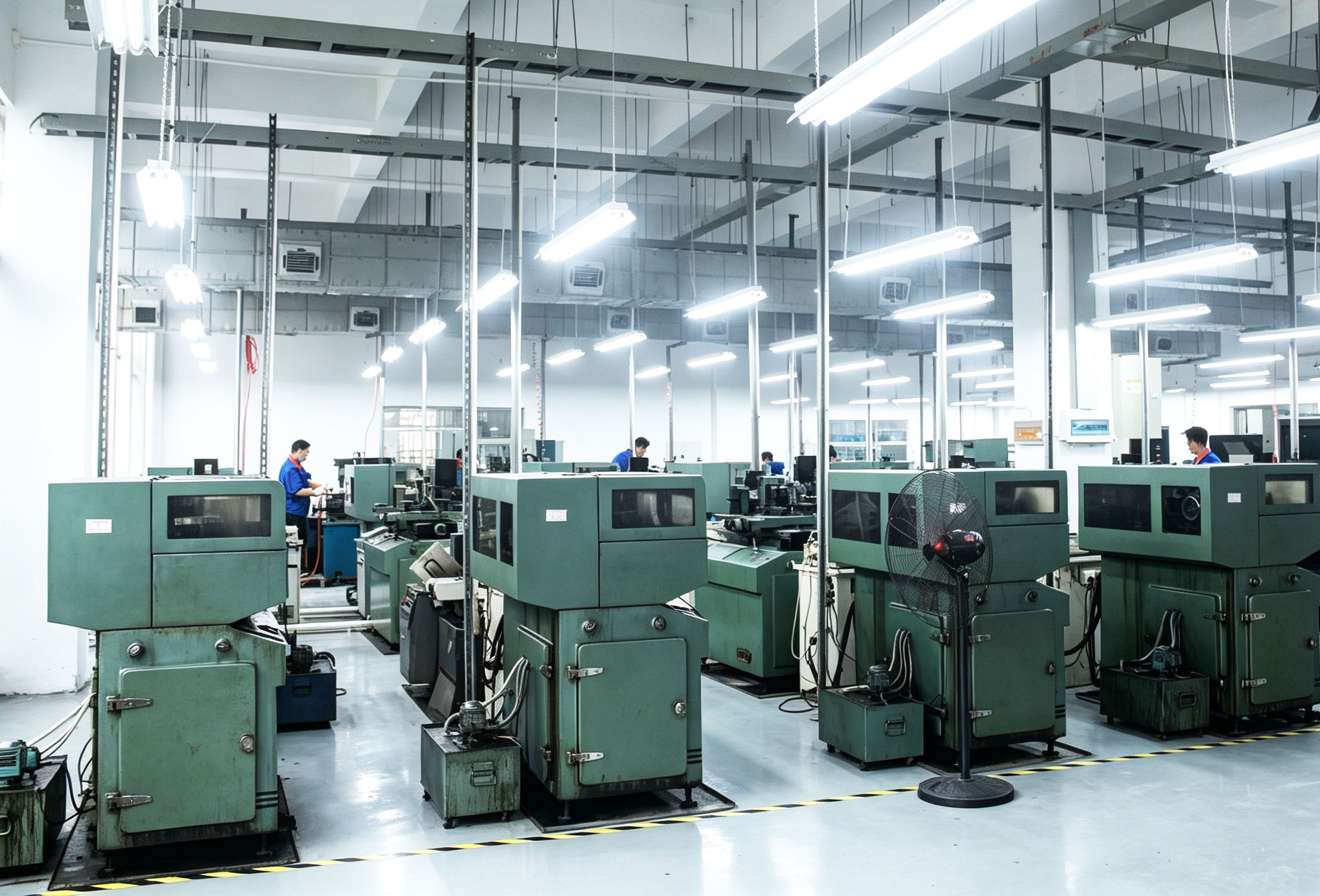
Yortho shared operating area, Huzhou, Zhejiang — standard consumable stock and OEM/ODM programs are handled from the same site.
A long-term orthodontic consumables partnership is a repeatable supply arrangement in which specification, compliance documentation, replenishment time and after-sales responsibility stay unchanged from one reorder to the next. It is proven by the tenth shipment, not the first.
This guide is written for the stage after the trial order: importers, distributors, clinic chains and private-label brand owners who already know which orthodontic materials they use and now need a supplier relationship that survives repeated reordering. It answers the questions buyers raise most often when a first order becomes an annual program, using power chains, elastic ligatures and auxiliaries as the working example.
What Makes an Orthodontic Consumables Partnership Long-Term?
Consumables are the part of an orthodontic catalogue that is bought again and again — power chains, elastic ligatures, lingual buttons, crimpable hooks and similar auxiliaries. The commercial risk is not concentrated in the first purchase. It appears later, when the same item is ordered for the fifth and tenth time and behaves differently from the batch a clinician has already standardized on.
Six failure points typically surface only after reordering:
- Force retention drifting between batches of power chain, which changes space-closure behaviour in the middle of a treatment series.
- Pack format changing without notice, for example a ligature supplied in a different bag count than the clinic has planned around.
- Silent substitution of a similar model when a line runs short.
- Certificates that covered the first shipment but do not cover a newly added destination market.
- No agreed owner and no agreed process when a batch underperforms in clinic.
- Commercial terms that reset at every renewal instead of being fixed for the duration of the program.
A workable partnership framework fixes five variables in writing: the specification sheet, the documentation set per destination market, the replenishment window, the commercial terms, and the route taken when something fails. Everything else — pricing goodwill, relationship history, catalogue breadth — is secondary to those five.
Industry Background: Why Consumables Reorders Are a Different Buying Problem
Demand is large and it is fragmented. Grand View Research values the global orthodontic consumables market at USD 3.1 billion in 2024 and projects USD 4.3 billion by 2030. Published figures disagree on the headline number because scopes differ: Global Market Insights values orthodontic supplies more broadly at USD 14.8 billion in 2024, a figure that includes categories outside consumables. For a buyer, the useful signal is not the total size but the reorder pattern behind it.
The same consumer-side research places clinics and standalone practices at over 50% of the end-user distribution channel. Consumption is therefore spread across many small, repeating order points rather than a few large contracts, and a distributor's margin depends on how predictably those points can be replenished.
Material choice is narrow. Orthodontic power chains and elastic ligatures are primarily manufactured from medical-grade polyurethane, as listed in manufacturer catalogues such as Dentaurum's, while stainless steel remains the most widely used material for arch wires and brackets according to Grand View Research. Because the material set is narrow, differentiation between suppliers comes from process control and consistency rather than from chemistry.
Compliance sets the floor for any long-term supply agreement. Medical device quality systems are certified to ISO 13485:2016 for international market access; the EU Medical Device Regulation (MDR 2017/745) is mandatory for CE marking; and the US FDA classifies orthodontic brackets as Class II devices requiring 510(k) clearance. Allergen awareness shapes specification as well: nickel and chromium are the primary allergens of concern in metal orthodontic appliances, which is one reason non-latex and low-allergy consumable options are requested.
How the Yortho Supply Model Supports Repeat Orders
Yortho is a UK brand of YAM Global Limited that operates its own orthodontic manufacturing factory in Asia, with the production site located in Huzhou City, Zhejiang Province, China. The company manufactures brackets, buccal tubes, molar bands, pliers, hand instruments, auxiliaries, pediatric preformed crowns, elastic ligatures and arch wires, and offers OEM and ODM services. Its stated operating priorities are stable quality, competitive lead-time and responsive after-sales support.Those three priorities map directly onto the failure points described above, which is why they are worth examining one by one rather than as a slogan.
Specification Stability Across Reorders
A repeat order is only useful when the item is genuinely identical. Yortho Orthodontic Power Chains (model Y-S80101) are supplied in three formats — open long, closed continuous and open short — packed one roll per pack, and are produced with precision-molded loops and consistent loop-to-loop dimension so that each segment delivers a repeatable target force. The material is a premium non-latex medical-grade polyurethane, selected for hypoallergenic handling.
Yortho Orthodontic Elastic Ligatures (model Y-S80201) are supplied as ligature rings in Normal and Ring clear types, packed 40 pcs/bag and 10 pcs/bag. Both the item code and the pack format belong in the specification sheet, because a bag count change is exactly the kind of detail that disrupts a clinic's stock planning even when the product itself is fine.
Replenishment: Stock, Dispatch and Transit
For standard products, Yortho maintains regular inventory in its warehouse and can pack and dispatch an order within 3 business days after payment confirmation. That is the number a replenishment calendar should be built on — not the order date, and not the transit time.
Transit then depends on the mode chosen: express courier by DHL, FedEx or UPS takes 3–7 business days; air freight 7–12 days; rail or overland freight 20–30 days for regions such as Europe and Central Asia; and sea freight 25–40 days. Because the spread between the fastest and slowest mode is wide, the buffer stock level should be set against the slowest mode actually used in the program.
Compliance Documentation That Travels With the Order
Yortho holds ISO quality management system certification, CE certification under the EU MDR regulation, and FDA registration, and has exported to the United States and Europe among other markets. Full PDF copies of test reports and certificates can be supplied, and the documentation set can be matched to the destination country once that country is confirmed — a practical detail, because customs requirements differ by market. Acceptance criteria can be agreed in writing before the first shipment, for example pre-shipment testing.
A Commercial Framework You Can Plan Around
For standard products, the minimum order value for a formal order is USD 1,000 in total, and a first order can be placed without an MOQ requirement. Custom work is structured separately: 1,000 units for ODM and 500 units for OEM, thresholds that cover material preparation and machine setup. Payment is by bank transfer (T/T): 100% in advance as the standard term, or, for orders above USD 10,000, 30% deposit to start production with the 70% balance due before shipment. PayPal or Ali-Pay in RMB is accepted for small sample orders.
After-Sales: The Part That Defines Year Two
Yortho provides comprehensive after-sales service on all orders and states that it stands behind product quality, with the explicit rationale that it values long-term partnerships. In a consumables program this is the clause that matters when a batch issue arises: the question is not whether a supplier has a returns policy, but whether there is an agreed person and process to resolve the issue without stalling the clinic's schedule.

Production site: brackets, auxiliaries, ligatures and instruments are manufactured under one quality management system.
Consumable Specifications Buyers Should Freeze Before Scaling
The specification sheet is the foundation of the partnership. In a consumables program it should record the item code, the variant, the pack format and the material, so that a reorder can be compared against a fixed reference rather than a memory.
| Product | Model | Material | Variants and pack format |
|---|---|---|---|
| Orthodontic Power Chains | Y-S80101 | High-elasticity polymers | Open long, Closed continuous, Open short; 1 roll/pk |
| Orthodontic Elastic Ligatures | Y-S80201 | High-elasticity polymers | Normal, Ring clear; 40 pcs/bag, 10 pcs/bag |
| Orthodontic Auxiliaries (Lingual Chain) | Y-F314 | Stainless steel | Sliver |
| Orthodontic Auxiliaries (Power Arm) | Y-F321 | Stainless steel | Round shape |
| Orthodontic Auxiliaries (Lingual Buttons) | Y-F322 | Stainless steel | Round base with hole |
Auxiliaries are usually ordered alongside the main consumables rather than as a separate exercise. Keeping them on the same specification sheet and the same replenishment cycle removes a category of small, urgent, high-freight-cost orders.
Product Maintenance: What Changes When Power Chains Stay in Service
Maintenance in a consumables program is not only about instruments. Power chains degrade in service, and the rate of that degradation determines how often a clinician returns to the chair to replace them. Yortho's comparative data for Y-S80101 describes the following differences against conventional power chains.
| Metric | Yortho Y-S80101 power chain | Conventional power chains |
|---|---|---|
| Permanent deformation rate | Reduced by 60%–73% | Baseline |
| Breakage in clinical simulation | Reduced by 75%–85% | Baseline |
| Chair-side replacement frequency | Reduced by 30%–50% | Baseline |
| Relative product cost | Approximately 10% lower | Baseline |
The procurement consequence is straightforward: if a clinic replaces power chains less often, the same consumption budget covers a longer treatment series, and the reorder interval lengthens. That is why maintenance data belongs in a supply agreement discussion rather than only in a product brochure.

Partnership reviews: specification, documentation and replenishment performance are reviewed on a fixed cadence.
Step-by-Step: Converting a Trial Order Into an Annual Program
- Freeze the specification sheet. Record item code, variant and pack format for every consumable in the program — for example Y-S80101 power chain in open long, closed continuous or open short format, and Y-S80201 ligature rings in Normal or Ring clear, 40 pcs/bag or 10 pcs/bag.
- Validate with samples before committing. Samples are available for a quality check. Most products are supplied free of charge except high-cost items such as pliers and self-ligating brackets, with the buyer covering courier shipping; where the buyer has a DHL, FedEx or UPS account, samples can ship collect, otherwise a freight quote is issued from the delivery address and postcode.
- Place a pilot order. A first order can be placed without an MOQ requirement. Formal orders carry a minimum order value of USD 1,000 in total, which allows a pilot to be sized to real consumption rather than to a discount tier.
- Map documentation to destination markets. Confirm ISO, CE (MDR) and FDA documentation, request the PDF test reports and certificates, and state the destination country so the documentation set matches local customs requirements. Agree the acceptance criterion, such as pre-shipment testing, in writing.
- Fix the commercial terms. Standard terms are 100% T/T in advance; for orders above USD 10,000, 30% deposit to start production and 70% before shipment. Delivery is quoted FOB or CIF, with import duties, taxes and clearance fees in the destination country handled by the buyer; DHL and FedEx handle customs paperwork automatically and contact the buyer directly if duty payment is required.
- Build the replenishment calendar. Standard products are packed and dispatched within 3 business days after payment confirmation. Add transit time by mode — express 3–7 business days, air 7–12 days, rail 20–30 days, sea 25–40 days — and hold buffer stock against the slowest mode the program actually uses.
- Define the review cadence and change control. Schedule a recurring review of consumption, backorders and pending specification changes, and agree how OEM (from 500 units) or ODM (from 1,000 units) changes are approved, so a refresh order never silently alters the standard line a clinic has standardized on.
Use Cases: Three Buyers, Three Partnership Shapes
Distributor Building a Monthly Replenishment Line in the EU
An EU distributor needs the documentation set to hold from shipment to shipment more than it needs a lower unit price, because a customs hold costs more than a price difference. The practical program is CE (MDR) documentation on file, dispatch within 3 business days of payment confirmation, and a fixed MOQ of USD 1,000 in total so stock can be topped up without overcommitting capital.
Clinic Chain Standardizing Power Chain Format
A multi-site clinic chain typically standardizes on one format for routine space closure, with a second format held for section-specific needs. Standardizing the format and the pack (1 roll/pk) makes consumption forecasting possible; the maintenance data above then determines how frequently that stock is actually consumed, and therefore the reorder interval.
Private-Label Brand Owner Entering the Category
A brand owner has two routes. ODM starts at 1,000 units and adapts an existing, proven design with the buyer's branding, logo or minor feature tweaks. OEM starts at 500 units and covers fully customized production to the buyer's specifications, materials and design, with the buyer owning the intellectual property. The commercial difference in who owns the design should be settled before the sample stage, not after.
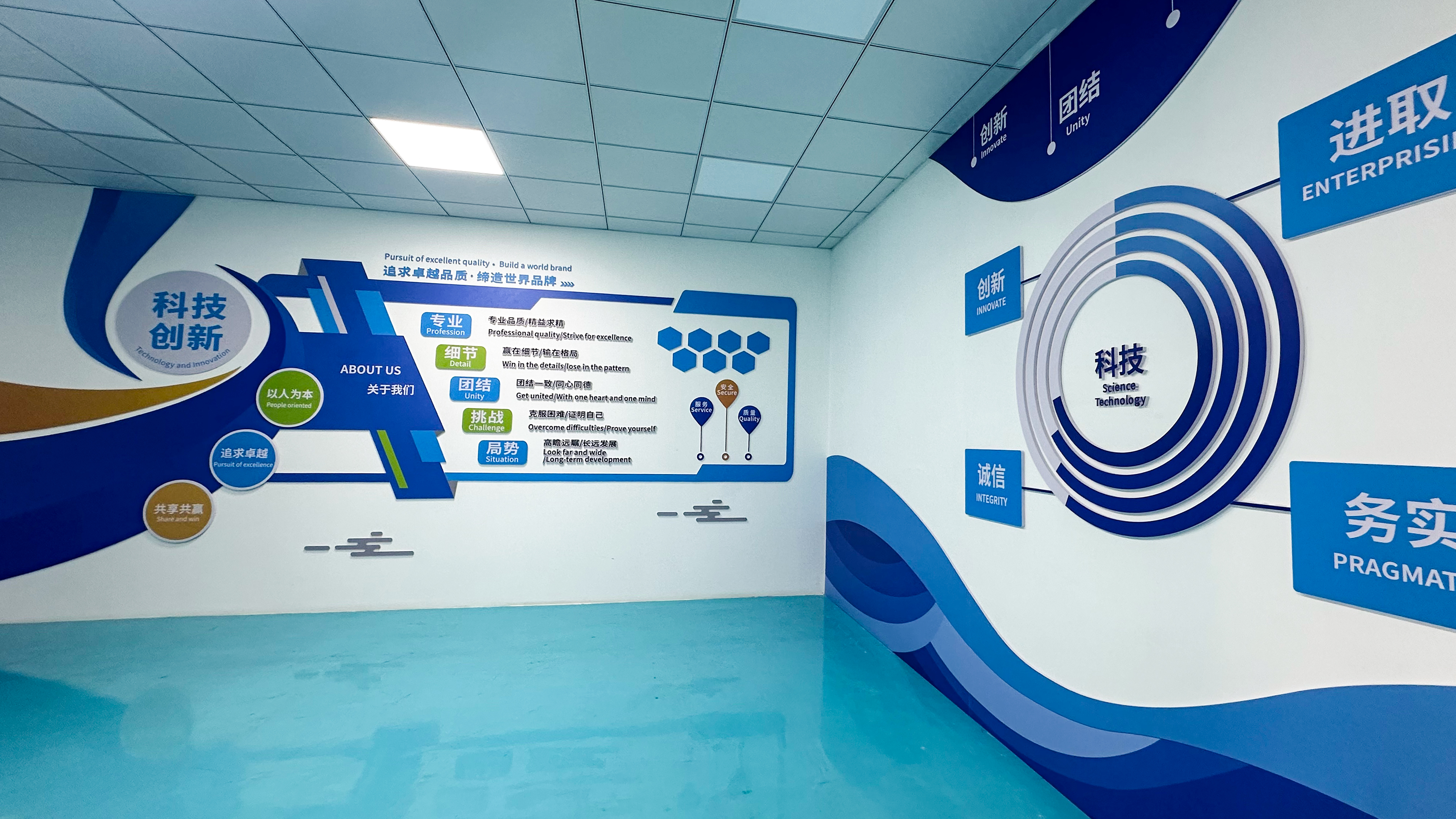
Company values as displayed at the Yortho site — the operating priorities behind the supply commitments described above.
Order Model Comparison: Stock, ODM and OEM
| Order model | Minimum quantity | What changes | Typically suits | Documentation |
|---|---|---|---|---|
| Standard catalogue order | No MOQ on the first order; USD 1,000 total for formal orders | Nothing — catalogue item with a fixed variant and pack format | Distributors and clinics testing demand before scaling | ISO, CE (MDR) and FDA registration; PDF test reports and certificates on request |
| ODM | From 1,000 units | Buyer branding, logo or minor feature tweaks applied to an existing proven design | Private-label brands entering a consumables category | Same base documentation, with buyer branding applied |
| OEM | From 500 units | Fully customized production to buyer specifications, materials and design; buyer owns the IP | Brand owners with in-house design and regulatory ownership | Same base documentation, matched to the destination country |
Payment terms apply across all three models: 100% T/T in advance as standard, or 30% deposit and 70% before shipment for orders above USD 10,000. Quotations are issued FOB or CIF.
FAQ: Long-Term Partnership Questions Buyers Ask
1. Which certificates should a long-term orthodontic consumables supplier hold?
Yortho holds ISO quality management system certification, CE certification under the EU MDR regulation, and FDA registration — the documentation set typically required to clear customs and to sell into regulated markets, and the company has exported to the US and Europe. Full PDF copies of test reports and certificates can be sent on request. Because requirements differ by market, the practical step is to confirm the destination country so the specific documentation your local customs requires can be verified before the first shipment. This matters most where ISO 13485:2016, EU MDR 2017/745 or US FDA Class II requirements apply to the wider device range you stock.
2. Do you provide after-sales service and technical support for repeat orders?
Yes. Yortho provides comprehensive after-sales service on all orders and states that it fully guarantees product quality, with the stated rationale that it focuses on long-term cooperation and will help resolve any issue that arises. On the manufacturing side, the company operates its own factory in Huzhou City, Zhejiang Province, China, and its R&D team consists of 20 engineers, with OEM and ODM services available. For a buyer, the relevant point is that the same organization holds the specification, the production process and the after-sales route, rather than splitting responsibility between a trading intermediary and an unnamed plant.
3. What are the MOQ and payment terms for a repeat-order program?
For standard products, a formal order carries a minimum order value of USD 1,000 in total, while a first order can be placed without an MOQ requirement. Custom programs are quoted separately: 1,000 units for ODM and 500 units for OEM. Payment is by bank transfer (T/T), with 100% in advance as the standard term; for orders above USD 10,000, terms are 30% deposit to start production and 70% balance before shipment. Small sample orders can also be settled by PayPal or Ali-Pay in RMB. Quotations are issued FOB or CIF, with destination-country duties and taxes handled by the buyer.
4. Can we validate samples before committing to a supply agreement?
Yes. Samples are available for a quality check. Most products are supplied free of charge, with exceptions for high-cost items such as pliers and self-ligating brackets; the buyer covers courier shipping. If you have a DHL, FedEx or UPS account, samples can be shipped collect. Otherwise, share the delivery address and postcode so a courier quote can be prepared. Sample validation is the correct stage to test the points that matter in a partnership — variant consistency, pack format and handling behaviour — before those details are written into the specification sheet.
5. What lead time and shipping options apply to repeat orders?
For standard products held in the warehouse, orders are packed and dispatched within 3 business days after payment confirmation. Transit then depends on the mode: express courier (DHL, FedEx, UPS) 3–7 business days; air freight 7–12 days; rail or overland freight 20–30 days for regions such as Europe and Central Asia; and sea freight 25–40 days. Under FOB or CIF terms the buyer is responsible for import duties, taxes and clearance fees in the destination country. To turn this into a working answer, send your destination country and postal code and the most reliable route and precise delivery time can be confirmed; the Yortho catalogue, including the consumables range and specifications, can be downloaded from the Yortho product brochure.
Conclusion: Partnership Is a Repeatable Process, Not a Discount
A long-term orthodontic materials partnership holds when five things stay fixed: the specification sheet, the documentation set for each destination market, the dispatch and transit window, the commercial terms, and the route taken when a batch underperforms. Pricing is a variable inside that framework, not a substitute for it.
The operational numbers in this article are the ones worth putting into a supply agreement: dispatch within 3 business days after payment confirmation for stocked standard products, an MOQ of USD 1,000 in total for formal orders with no MOQ on the first order, 500 units for OEM and 1,000 units for ODM, and a documentation set covering ISO, CE (MDR) and FDA that is matched to the country you are importing into. Those commitments are verifiable, and verifiable commitments are what make a consumables program predictable in year two.
Next Step: Match the Consumables Range to Your Reorder List
Share your destination country, your monthly consumption of power chains and elastic ligatures, and the variants you have standardized on. You will receive a specification-matched quotation, sample arrangements, and the documentation set for your market.

Brochure: Download the Yortho catalogue (PDF)
Website: www.yortho.com | Email: info@yortho.com | WhatsApp: +86 180-5879-3627
Yortho — Zhejiang YO Medical Technology Co., Ltd, 5th Floor, Building 1, No. 2 Lemin Road, Xinshi Town, Deqing, Huzhou, Zhejiang Province, China 313201.
Have Questions or Need More Details?
Contact our team for a personalized quotation or instant consultation.
Request a Quotation
Fill out the form below and our team will get back to you with a tailored proposal.
WhatsApp Direct Chat
Prefer to chat in real-time? Message us on WhatsApp for instant assistance & quick answers.
- Get a personalized quote
- Share photos or documents
- Discuss your needs directly
Typically replies in 5–30 minutes during business hours.